Brightstar Resources (BTR:AU) has announced Sandstone Strategic Plan to Deliver Long-Life Production Hub
Download the PDF here.
This post appeared first on investingnews.com


Brightstar Resources (BTR:AU) has announced Sandstone Strategic Plan to Deliver Long-Life Production Hub
Download the PDF here.

Coelacanth Energy Inc. (TSXV: CEI,OTC:CEIEF) (‘Coelacanth’ or the ‘Company’) announces that its board of directors approved the granting of incentive stock options (‘Options’) under its stock option plan to acquire up to an aggregate of 8,634,250 common shares (‘Common Shares’) of the Corporation (6,298,250 granted to certain of its directors and officers and 2,336,000 granted to certain of its employees) and to the granting of restricted share units (‘RSUs’) under its restricted share unit plan to obtain up to an aggregate of 5,369,500 Common Shares (4,224,250 granted to certain of its directors and officers and 1,145,250 granted to certain of its employees).
All of the Options are exercisable for a period of five years at a price of $0.80 per Common Share and 33⅓% of the Options will vest on the date that is one year after the date of the grant of such Options and the remainder will vest 33⅓% per year thereafter. All of the RSUs are exercisable for a period of three years at no additional cost and 33⅓% of the RSUs will vest on the date that is one year after the date of the grant of such RSUs and the remainder will vest 33⅓% per year thereafter.
Following the grant of Options and RSUs, Coelacanth has an aggregate of 30,220,931 Options and 9,865,698 RSUs outstanding. Coelacanth’s share based incentive plans limit the total number of Common Shares underlying the aggregate outstanding Options and RSUs to no more than 10% of the issued and outstanding Common Shares of 535,316,833. As of the date of this press release, the total number of Common Shares underlying the outstanding Options and RSUs on an aggregate basis is 40,086,629 or approximately 7.5% of the issued and outstanding Common Shares.
FOR FURTHER INFORMATION, PLEASE CONTACT:
Coelacanth Energy Inc.
2110, 530 – 8th Ave SW
Calgary, Alberta T2P 3S8
Phone: 403-705-4525
www.coelacanth.ca
Mr. Robert J. Zakresky
President and Chief Executive Officer
Mr. Nolan Chicoine
Vice President, Finance and Chief Financial Officer
NEITHER THE TSX VENTURE EXCHANGE NOR ITS REGULATION SERVICES PROVIDER (AS THAT TERM IS DEFINED IN THE POLICIES OF THE TSX VENTURE EXCHANGE) ACCEPTS RESPONSIBILITY FOR THE ADEQUACY OR ACCURACY OF THIS RELEASE.
NOT FOR DISTRIBUTION IN TO U.S. NEWS WIRE SERVICES OR DISSEMINATION IN THE UNITED STATES OF AMERICA
To view the source version of this press release, please visit https://www.newsfilecorp.com/release/281716
News Provided by TMX Newsfile via QuoteMedia

VANCOUVER, BRITISH COLUMBIA / ACCESS Newswire / January 27, 2026 / Prince Silver Corp. (CSE:PRNC,OTC:PRNCF)(OTCQB:PRNCF)(T130:Frankfurt) (‘Prince Silver’or the ‘Company’) is pleased to announce a non-brokered private placement of up to 4,687,500 units of the Company (‘Units‘) at a price of $0.70 per Unit for aggregate gross proceeds of up to $3,000,000 (the ‘Private Placement‘). Each Unit will consist of one common share (a ‘Common Share‘) and one-half common share purchase warrant, with each full warrant (a ‘Warrant‘) being exercisable to purchase one Common Share at a price of $1.00 for 24 months from the date of issuance ; provided that if the closing price of the Company’s Common Shares for a period of 10 consecutive trading days is $1.40 or higher, the Company will have the right to accelerate the expiry date of the Warrants upon notice given by press release and the Warrants will thereafter expire on the 30th calendar day after the date of such press release.
The Company intends to pay finders’ fees in an amount equal to 7% to eligible finders, in accordance with applicable securities laws and the policies of the Canadian Stock Exchange (‘CSE‘). The Private Placement is subject to approval of the CSE, and all securities issued under the Private Placement will be subject to statutory hold periods expiring four months and one day from the date of closing of the Private Placement pursuant to applicable securities laws and CSE policy.
The Company intends to use the net proceeds of the Offering to advance exploration and development activities at its Prince Silver Project in Nevada, as well as for working capital and general corporate purposes. Closing of the Offering is subject to customary conditions, including approval of the Canadian Securities Exchange.
About Prince Silver Corp.
Prince Silver Corp. is a silver exploration company advancing its past-producing Prince Silver-Zinc-Manganese-Lead Mine in Nevada, USA. Featuring near-surface mineralization that was historically drill tested by over 129 holes and is open in all directions, the Prince Project offers a clear path toward a maiden 43-101 compliant resource estimate. The Company also holds an interest in the Stampede Gap Project, a district-scale copper-gold-molybdenum porphyry system located 15 km north-northwest of the Prince Silver Project, highlighting Prince Silver’s focus on high-potential, strategically located exploration assets.
On Behalf of the Board of Directors
Derek Iwanaka, CEO & Director
Tel: 604-928-2797
Email: info@princesilvercorp.com
Website: www.princesilvercorp.com
Forward-Looking Information
Certain statements in this news release are forward-looking statements, including with respect to future plans, and other matters. Forward-looking statements consist of statements that are not purely historical, including any statements regarding beliefs, plans, expectations, or intentions regarding the future. Such information can generally be identified by the use of forwarding-looking wording such as ‘may’, ‘expect’, ‘estimate’, ‘anticipate’, ‘intend’, ‘believe’ and ‘continue’ or the negative thereof or similar variations. Some of the specific forward-looking information in this news release includes, but is not limited to, statements with respect to: ongoing and proposed drill programs, amendments to the Company’s website, property option payments and regulatory and corporate approvals. The reader is cautioned that assumptions used in the preparation of any forward-looking information may prove to be incorrect. Events or circumstances may cause actual results to differ materially from those predicted, as a result of numerous known and unknown risks, uncertainties, and other factors, many of which are beyond the control of the Company, including but not limited to, business, economic and capital market conditions, the ability to manage operating expenses, dependence on key personnel, completion of satisfactory due diligence in respect of the Acquisition and related transactions, and compliance with property option agreements. Such statements and information are based on numerous assumptions regarding present and future business strategies and the environment in which the Company will operate in the future, anticipated costs, and the ability to achieve goals. Factors that could cause the actual results to differ materially from those in forward-looking statements include, the continued availability of capital and financing, litigation, failure of counterparties to perform their contractual obligations, failure to obtain regulatory or corporate approvals, exploration results, loss of key employees and consultants, and general economic, market or business conditions. Forward-looking statements contained in this news release are expressly qualified by this cautionary statement. The reader is cautioned not to place undue reliance on any forward-looking information.
The forward-looking statements contained in this news release are made as of the date of this news release. Except as required by law, the Company disclaims any intention and assumes no obligation to update or revise any forward-looking statements, whether as a result of new information, future events or otherwise.
This news release does not constitute an offer to sell, or a solicitation of an offer to buy, any securities in the United States. The securities have not been and will not be registered under the United States Securities Act of 1933, as amended (the ‘U.S. Securities Act’) or any state securities laws and may not be offered or sold within the United States or to U.S. Persons (as defined under the U.S. Securities Act) unless registered under the U.S. Securities Act and applicable state securities laws or an exemption from such registration is available.
SOURCE: Prince Silver Corp.
View the original press release on ACCESS Newswire
News Provided by ACCESS Newswire via QuoteMedia
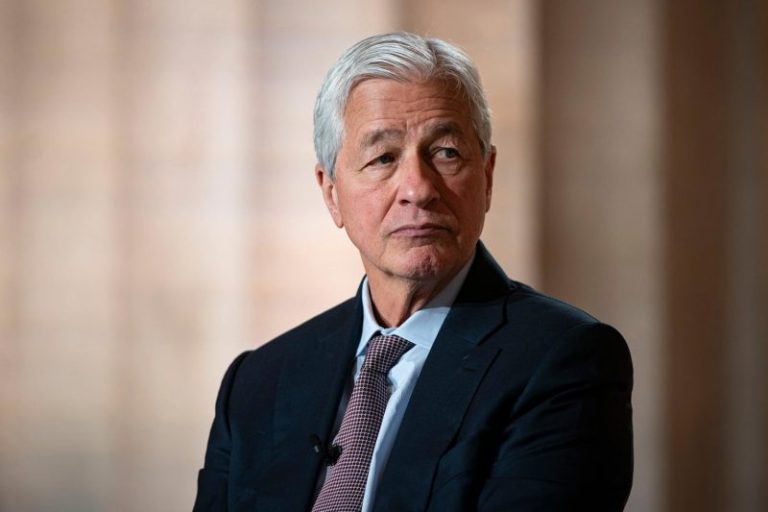
President Donald Trump on Thursday filed a $5 billion lawsuit against JPMorgan Chase and its CEO Jamie Dimon, claiming that the bank improperly closed his accounts for political reasons.
‘While we regret President Trump has sued us, we believe the suit has no merit,’ a JPMorgan Chase spokesperson said. ‘We respect the President’s right to sue us and our right to defend ourselves – that’s what courts are for.’
The suit accuses the bank of libel and breach of implied covenant of good faith and fair dealing. It also says the bank and its chief executive violated Florida trade practices laws.
The suit says Trump held ‘several’ accounts at the firm which were closed.
On Feb. 19, 2021, shortly after the Jan. 6 Capitol Hill riot, the bank notified Trump that the accounts would be closed within two months, the suit also says.
The lawsuit adds to a still-growing list of legal efforts from Trump directed at a wide variety of institutions — from media outlets to tech platforms — many of which have resulted in multimillion-dollar settlements. The president’s company, the Trump Organization, sued Capital One Bank last year over allegations of improper account closures. Capital One said at the time that the allegations have no merit.
Dimon, as head of JPMorgan Chase, the nation’s largest bank, is among the most influential people in the business world and someone who has been courted for years by Republicans and Democrats. In the run-up to the 2024 election, Trump falsely claimed that Dimon had endorsed him.
Dimon has at times been critical of some Trump policies — most notably inflation — while supportive of others, including efforts to streamline the U.S. government.
On Wednesday, Dimon criticized the Trump administration over its immigration policies.
‘I don’t like what I’m seeing,’ Dimon told attendees at the World Economic Forum in Davos, Switzerland. Dimon also said that while he doesn’t agree with everything the administration does, he does agree with some of its economic policies.
On Saturday, Trump threatened the lawsuit in a Truth Social post. Over the weekend, JPMorgan Chase said it appreciated ‘that this administration has moved to address political debanking and we support those efforts.’
Almost exactly one year ago, Trump used an address at the World Economic Forum to take a shot at JPMorgan and its competitor, Bank of America.
‘I hope you start opening your bank to conservatives because many conservatives complain that the banks are not allowing them to do business,’ Trump said.
“You and Jamie and everybody, I hope you’re going to open your banks to conservatives because what you’re doing is wrong,” Trump said.
Bank of America said that it serves over 70 million consumers and does not close accounts for political reasons. JPMorgan says that it also serves tens of millions of accounts and likewise does not close accounts on political grounds.
In an expletive-laden interview with CNBC last year, Trump vented his frustrations at big banks that close accounts for legal and regulatory reasons.
‘I had JPMorgan Chase — I had hundreds of millions of dollars in cash,’ Trump told the cable network on Aug. 5. ‘I was loaded up with cash, and they told me, ‘I’m sorry, sir, we can’t have you.”
Trump says he was informed he had 20 days to move his assets out of the bank. ‘I said, ‘You got to be kidding. I’ve been with you for 35, 40 years,” the president recounted.
Trump said, ‘then what happens is I call a Bank of America.’
‘And they have zero interest,’ he said. CEO Brian Moynihan ‘was kissing my a– when I was president, and when I called him after I was president to deposit a billion dollars plus and a lot of other things … and he said, ‘we can’t do it.”
The JPMorgan Chase spokesperson said Thursday that the bank ‘does not not close accounts for political or religious reasons. We do close accounts because they create legal or regulatory risk for the company.’
Trump was indicted multiple times after his first term in office. In 2024, he was indicted on charges that he conspired to defraud the United States, conspiracy to to obstruct an official proceeding, obstruction of and attempt to obstruct an official proceeding and conspiracy against rights.
In recent years, banks have faced intense pressure from conservatives leveling ‘debanking’ claims against them. However, banks and their lobbying groups have long maintained that they do not close accounts for political or religious reasons, but they close accounts based primarily on legal or regulatory grounds.
Trump’s administration has sought to ease those regulations in order to make it harder for a bank to close a customer’s account. In August, Trump signed an executive order which sought to end ‘politicized or unlawful debanking activities.’
In September, the Office of the Comptroller of the Currency, one of the top banking regulators, began a review of banking rules to ‘depoliticize the banking system.’
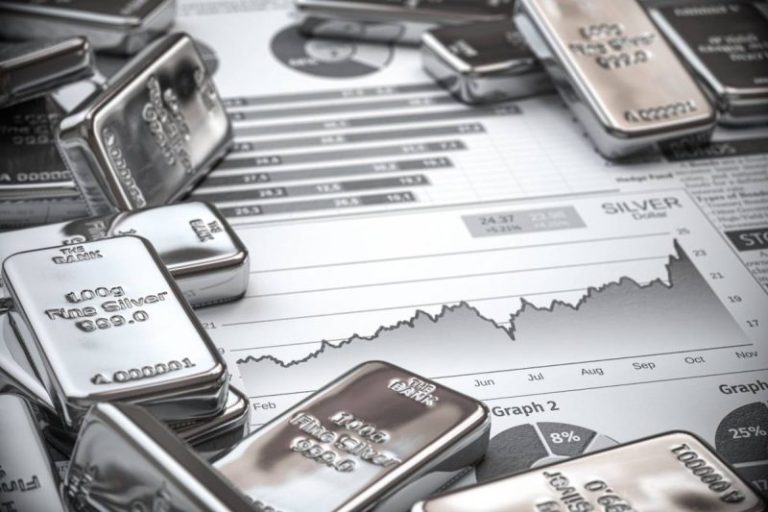
Like its sister metal gold, silver has been attracting renewed attention as a safe-haven asset.
Although silver continues to exhibit its hallmark volatility, a silver bull market is well underway.
Experts are optimistic about the future, and as the silver price’s momentum continues in 2026, investors are looking for price forecasts and asking, “What was the highest price for silver?”
The answer reveals how much potential there is for the silver price to rise.
Read on for a look at silver’s historical moves, its new all-time high price and what they could mean for both the price of silver today and the white metal’s price in the future.
Before discovering what the highest silver price was, it’s worth looking at how the precious metal is traded. Knowing the mechanics can be useful in understanding why and how its price changes on a day-to-day basis and beyond.
Silver bullion is traded in dollars and cents per ounce, with market activity taking place worldwide at all hours, resulting in a live silver price. Key commodities markets like New York, London and Hong Kong are just a few locations where investors trade the metal. London is seen as the center of physical silver trade, while the COMEX division of the CME Group’s (NASDAQ:CME) New York Mercantile Exchange, called the NYMEX, is where most paper trading is done.
There are two popular ways to invest in silver. The first is through purchasing silver bullion products such as bullion bars, bullion coins and silver rounds. Physical silver is sold on the spot market, meaning that to invest in silver this way, buyers pay a specific price for the metal — the silver price per ounce — and then have it delivered immediately.
The second is accomplished through paper trading, which is done via the silver futures market, with participants entering into futures contracts for the delivery of silver at an agreed-upon price and time. In such contracts, two positions can be taken: a long position to accept delivery of the metal or a short position to provide delivery.
Paper trading might sound like a strange way to get silver exposure, but it can provide investors with flexibility that they wouldn’t get from buying and selling bullion. The most obvious advantage is perhaps the fact that trading in the paper market means silver investors can benefit long term from holding silver without needing to store it. Furthermore, futures trading can offer more financial leverage in that it requires less capital than trading in the physical market.
Market participants can also invest in silver through exchange-traded funds (ETFs). Investing in a silver ETF is similar to trading a stock on an exchange, and there are several silver ETFs to choose from. Some ETFs focus on physical silver bullion, while others focus on silver futures contracts. Still others focus on silver stocks or follow the live silver price.
The silver all-time high was US$101.31, which it set on January 23, 2026.
The silver price has continued its rally into 2026 following a 2025 that saw the white metal finally break its previous highest price and gain more than 190 percent at its highest point.
Silver’s strong performance has been driven by a variety of factors, including widespread geopolitical uncertainty, a weak US dollar, speculation around US Federal Reserve interest rate cuts and increased investor interest. We break down the news driving its price performance and new highs in the section below.
Prior to October 9, 2025, the white metal’s all-time high had been the same for 45 years — silver’s former all-time high was US$49.95, and it was set on January 17, 1980.
It’s worth unpacking what happened, because the price didn’t exactly reach that level by honest means.
As Britannica explains, two wealthy traders called the Hunt brothers attempted to corner the market by buying not only physical silver, but also silver futures — they took delivery of those silver futures contracts instead of taking legal tender in the form cash settlements. Their exploits ultimately ended in disaster: On March 27, 1980, they missed a margin call and the silver market price plunged to US$10.80. This day is infamously known as Silver Thursday.
That record silver price wouldn’t be tested again until April 2011, when it reached US$47.94. This was more than triple the 2009 average silver price of US$14.67, with the price uptick coming on the back of very strong investment demand.
So what happens next? While silver has officially broken its 1980 peak, it is still well below that price point adjusted for inflation, but its rise above US$71 has officially topped its inflation-adjusted peak from 2011.
It remains to be seen just how high silver can go.
Silver price chart, January 23, 2025 to January 23, 2026.
The silver price experienced a momentum shift at the start of 2025, breaking through the US$30 barrier as early as January 5, and reaching US$31.31 by January 29. The metal continued to post gains through much of February and March, climbing to US$32.94 on February 20 and then peaking at its quarterly high of US$34.21 on March 28.
Following Trump’s tariff announcements on April 2, silver slumped to below US$30. While the Trump administration’s tariff policies have been largely beneficial for safe-haven assets like precious metals, there were concerns that the threat of tariffs could weaken industrial demand, which could cool price gains in the silver market.
Yet those concerns were pushed to the back burner as recent economic and geopolitical events have raised analysts’ expectations of a September rate cut by the Fed. The benchmark rate has not changed since November 2024.
On June 5, the silver price rose to a 13 year high of US$36.05 in early morning trading, before retreating toward the US$35.50 mark. By June 16, the white metal had broken through the US$37 mark for the first time since May 2011.
In July, increasing geopolitical strife in the Middle East and Russia-Ukraine coupled with a positive outlook for China’s solar power industry proved price positive for both silver’s precious metals and industrial angles.
The silver price overtook the US$39 level to reach US$39.24 on July 22.
These same forces, coupled with the nearly unanimous rate cut expectations, launched the price of silver to over US$40 on August 31 for the first time since 2011, and by September 3 it had climbed as high as US$41.45. Silver continued climbing through September, progressively breaking level after level to top US$47 by the month’s end.
The white metal broke its all-time highs in most currencies, including Canadian dollars and Australian dollars, on September 22. Silver started Q4 by continuing its ascent, breaking through its 2011 peak and topping US$48 on October 3, before climbing above US$51 to beat its US dollar high on October 9.
It continued climbing even higher on the safe-haven demand fundamentals behind its 2025 momentum. Helping drive that demand in October was escalating trade tensions between the US and China, leading to export controls on additional rare earth metals by China and threats of 100 percent tariffs on Chinese imports by the US.
While silver pulled back to around US$48 in late October, news that the US government shut down had come to an end on November 9 drove the silver price back above US$50.
Silver’s foray above the US$56 level on November 28 came on the back of an outage at the Comex, where trading was briefly halted due to a ‘cooling issue’ at a CyrusOne data center used by the exchange.
Silver continued even higher through early December, and on December 10 it broke above US$60 for the first time, alongside the Fed deciding to once again cut interest rates. Less than two weeks after breaking US$60, the silver price passed US$70 on December 23 as investors continued piling in and the situation between the US and Venezuela ramped up. On December 28, silver started the week by breaching US$83 on surging interest in China.
To start the final week of December, silver broke through US$80 and hit a 2025 peak of US$83.90 on December 28. However, over the following day, silver and its fellow precious metals pulled back significantly.
2026 has just begun, but it’s already brought a slew of positive price drivers for silver. Geopolitical concerns remain front and center, and US-global relations were a significant talking point as leaders from global governments and businesses met in mid-January at the World Economic Forum in Davos, Switzerland.
Trump’s push to take control of Greenland has added pressure between the US and Europe in recent weeks. He threatened to add tariffs on eight of the European countries that opposed the move, but changed his tune at the World Economic Forum on January 21, saying he would not use force to take Greenland and backing down on tariffs.
A significant silver surge from US$80 on January 12 to over US$93 by January 14 came in the days after the US Department of Justice launching a criminal probe into Fed Chair Jerome Powell.
Powell said the threat of charges is a consequence of the Fed not lowering rates as quickly as the Trump administration prefers, and instead setting them based on evidence and economic conditions.
News on January 22 that Trump is suing JPMorgan Chase (NYSE:JPM) and its CEO Jamie Dimon also ramped up market tension. The lawsuit alleges that the firm closed accounts belonging to Trump and related entities in early 2021 for political reasons, with Trump saying that Dimon ‘debanked’ him.
Like the prices of other metals, the silver spot price is most heavily influenced by supply and demand dynamics. However, as the information above illustrates, the silver price can be highly volatile. That’s partially due to the fact that the metal is subject to both investment and industrial metal demand within global markets.
In other words, it’s bought by investors who want it as a store of wealth, as well as by manufacturers looking to use it for different applications that are incredibly varied. For example, silver has diverse technological applications such as batteries, solar panels, microchips and catalysts, but it’s also used in medicine and in the automotive industry.
In terms of supply, the world’s three top producers of the metal are Mexico, China and Peru. Even in those countries silver is usually a by-product — for instance, a mine producing primarily gold or lead might also have silver output.
The Silver Institute’s latest World Silver Survey, put together by Metals Focus, outlines a 0.9 percent increase in global mine production to 819.7 million ounces in 2024. This was in partly the result of a return to operations at Newmont’s (TSX:NGT,NYSE:NEM,ASX:NEM) Peñasquito mine in Mexico following a suspension of activity brought about by strike action among workers and improved recoveries out of Fresnillo (LSE:FRES,OTC Pink:FNLPF) and MAG Silver’s (TSX:MAG,NYSEAMERICAN:MAG) Juanicipio. Silver output also increased in Australia, Bolivia and the US.
The firm is forecasting a 1.9 percent rise in global silver mine production to 823 million ounces in 2025. Much of that growth is expected to come out of Mexico, and it is also projecting output will rise in Chile and Russia. Lower production from Australia and Peru will offset some of these gains.
Looking at demand, Metals Focus sees growth in 2025 flatlining as industrial fabrication takes a hit from the global tariff war. This could be tempered by an anticipated rebound in demand from physical investment in silver bars and coins.
The silver market is expected to experience a substantial deficit of 117.6 million ounces in 2025, amounting to the sixth straight year of supply shortage for the metal.
As a final note on silver, it’s important for investors to be aware that manipulation of prices is a major issue in the space.
For instance, in 2015, 10 banks were hit in a US probe on precious metals manipulation. Evidence provided by Deutsche Bank (NYSE:DB) showed “smoking gun” proof that UBS Group (NYSE:UBS), HSBC Holdings (NYSE:HSBC), the The Bank of Nova Scotia (TSX:BNS) and other firms were involved in rigging silver rates from 2007 to 2013. In May 2023, a silver manipulation lawsuit filed in 2014 against HSBC and the Bank of Nova Scotia was dismissed by a US court.
JPMorgan Chase & Co. (NYSE:JPM) has been long at the center of silver manipulation claims as well. For years the firm has been in and out of court for the accusations. In 2020, JPMorgan agreed to pay US$920 million to resolve federal agency probes regarding the manipulation of multiple markets, including precious metals.
In 2014, the London Silver Market Fixing stopped administering the London silver fix, which had been used for over a century to fix the price of silver. It was replaced by the LBMA Silver Price, which is run by ICE Benchmark Administration, in a bid to increase market transparency.
Market watchers like Ed Steer have said that the days of silver manipulation are numbered, and that the market will see a significant shift when the time finally comes.
Silver’s new all-time highs have brought the metal into uncharted territory, and as momentum continues for the silver price in 2026 investors are wondering how high it could go.
It is worth keeping in mind that silver has yet to break its inflation-adjusted high; considering its previous peaks can offer investors a look into how silver’s gains in 1980 and 2011 stack up to its run in 2025 and 2026.
While it’s impossible to know for sure what’s next for silver, keeping an eye on the factors driving its performance, including gold’s performance, geopolitics, the economy and industrial demand, will help investors make decisions on when to buy and sell.
Securities Disclosure: I, Lauren Kelly, currently hold no direct investment interest in any company mentioned in this article.
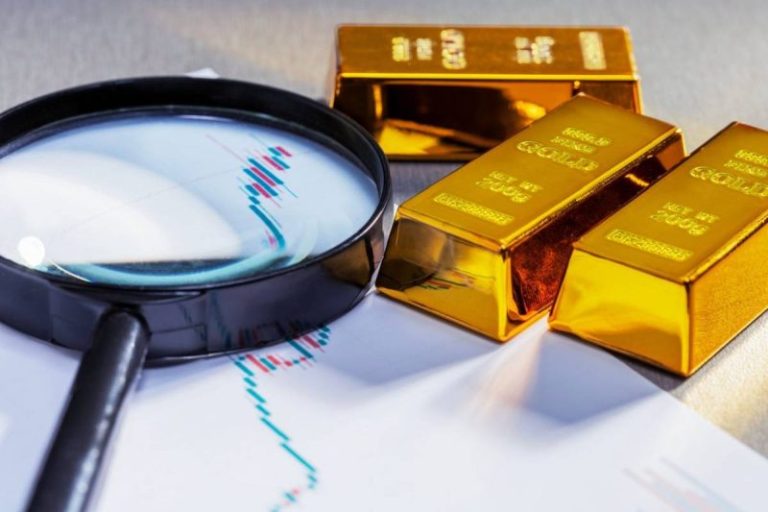
Gold has long been considered a store of wealth, and the price of gold often makes its biggest gains during turbulent times as investors look for cover in this safe-haven asset.
The 21st century has so far been heavily marked by episodes of economic and sociopolitical upheaval. Uncertainty has pushed the precious metal to record highs as market participants seek its perceived security.
And each time the gold price rises, there are calls for even higher record-breaking levels.
Gold market gurus from Lynette Zang to Chris Blasi to Jordan Roy-Byrne have shared eye-popping predictions on the gold price that would intrigue any investor — gold bug or not.
Some have posited that the gold price may rise as high as US$5,000 per ounce, and there are those who believe that US$10,000 gold or even US$40,000 gold could become a reality.
These impressive price predictions have investors wondering, what is gold’s all-time high (ATH)?
Gold has reached new all-time highs dozens of times in recent years. Find out what has driven it to these levels, plus how the gold price has moved historically and what has impacted its performance.
Before discovering what the highest gold price ever was, it’s worth looking at how the precious metal is traded. Knowing the mechanics behind gold’s historical moves can help illuminate why and how its price changes.
Gold bullion is traded in dollars and cents per ounce, with activity taking place worldwide at all hours, resulting in a live price. Investors trade gold in major commodities markets such as New York, London, Tokyo and Hong Kong.
London is seen as the center of physical precious metals trading, including for silver. The COMEX division of the New York Mercantile Exchange is home to most paper trading.
There are many popular ways to invest in gold. The first is through purchasing gold bullion products such as bullion bars, bullion coins and rounds. Physical gold is sold on the spot market, meaning that buyers pay a specific price per ounce for the metal and then have it delivered or stored in a secure facility. In some parts of the world, such as India, buying gold in the form of jewelry is the largest and most traditional route to investing in gold.
Another path to gold investment is paper trading, which is done through the gold futures market. Participants enter into gold futures contracts for the delivery of gold in the future at an agreed-upon price.
In such contracts, two positions can be taken: a long position under which delivery of the metal is accepted or a short position to provide delivery of the metal. Paper trading as a means to invest in gold can provide investors with the flexibility to liquidate assets that aren’t available to those who possess physical gold bullion.
One significant long-term advantage of trading in the paper market is that investors can benefit from gold’s safe-haven status without needing to store it. Furthermore, gold futures trading can offer more financial leverage in that it requires less capital than trading in the physical market. Investors can also purchase physical gold via the futures market, but the process is complicated and lengthy and comes with a large investment and additional costs.
Aside from those options, market participants can invest in gold through exchange-traded funds (ETFs). Investing in a gold ETF is similar to trading a gold stock on an exchange, and there are numerous gold ETF options to choose from depending on your preference. For instance, some ETFs focus solely on physical gold bullion, while others focus on gold futures contracts. Other gold ETFs center on gold-mining stocks or follow the gold spot price.
It is important to understand that you will not own any physical gold when investing in an ETF — in general, even a gold ETF that tracks physical gold cannot be redeemed for tangible metal.
Gold has an interesting relationship with the stock market. The two often move in sync during “risk-on periods” when investors are bullish. On the flip side, they tend to become inversely correlated in times of volatility.
According to the World Gold Council, gold’s ability to decouple from the stock market during periods of stress makes it “unique amongst most hedges in the marketplace.” It is often during these times that gold outperforms the stock market. For that reason, it is often used as a portfolio diversifier to hedge against uncertainty.
There are a variety of options for investing in gold stocks, including gold-mining stocks on the TSX and ASX, gold juniors, precious metals royalty companies and gold stocks that pay dividends.
The gold price peaked at US$4,924.29, its all-time high, on January 22, 2026.
What drove it to this new ATH? Gold reached its new highest price on January 22 alongside dips in the US dollar, geopolitical tensions and the start of testimony from Jack Smith, who took over the investigation of Donald Trump’s attempt to overturn the 2020 election, including the events of January 6, 2021.
Smith told the US House Judiciary Committee Thursday that his investigation came to a conclusion, without reasonable doubt, that Trump ‘engaged in criminal activity.’ However, Trump then winning the 2024 election meant he could not be prosecuted due to being a sitting president.
It also comes at a time when many of the world’s political leaders and businesspeople are meeting in Davos, Switzerland, for the World Economic Forum, with the US’s moves under the Trump administration a major talking point at the conference.
Tensions are currently high between Europe and the US because of Trump’s goal of taking control of Greenland from Denmark, one of the US’s allies in NATO. Trump announced additional 10 percent tariffs on eight of the European countries opposing the move, but backed down on them on January 21.
The new gold peak is part of a bull run in precious metals that has also been driven in part by US economic uncertainty, a falling US dollar and strong investor interest in the safe haven metals.
Other factors supporting gold include central bank gold buying, increased gold ETF inflows and news surrounding the US Federal Reserve’s interest rate decisions.
Notably, on September 7, gold’s record-breaking run officially took it past its inflation adjusted all-time high of US$850 per ounce set in January 1980.
One year gold price chart, January 21, 2025, to January 21, 2026.
Increased economic and geopolitical turmoil caused by the Trump administration has been a tailwind for gold, as well as a weakening US dollar, sticky inflation in the country and increased safe-haven gold demand.
Since coming into office in late January, US President Donald Trump threatened or enacted tariffs on many countries, including blanket tariffs on longtime US allies Canada and Mexico and tariffs on the EU. Trump also implemented 25 percent tariffs on all steel and aluminum imports.
Gold first broke through the US$3,000 per ounce level in mid-March, and continued gaining into Q2. The gold price set a string of new highs in the month of April amid high market volatility as markets reacted to tariff decisions from Trump, including the ‘Liberation Day’ tariffs announced April 2, and the escalating trade war between the US and China.
By April 11, Trump had raised US tariffs on Chinese imports to 145 percent and China had raised its tariffs on US products to 125 percent. Trump has reiterated that the US may need to go through a period of economic pain to enter a new ‘golden age’ of economic prosperity.
Falling markets during this time and a declining US dollar also supported gold, as did increased buying from China. Elon Musk’s call to audit the gold holdings in Fort Knox brought further attention to the yellow metal.
Gold spent the remainder of Q2 and early Q3 range-bound below US$3,500, before a variety of factors supported gold to more than 10 new highs in September. We break them down in detail in our Q3 2025 gold update, but some highlights are below.
News and speculation around the September US Federal Reserve meeting supported the gold price in September, with rate cut expectations heavily fueled by the release of US consumer price index data, as well as weaker than expected US jobs numbers. The Fed ultimately announced the widely anticipated interest rate reduction of 25 basis points on September 17.
Highs in mid-September were also supported by the US dollar index falling to a year-to-date low 96.56 on September 16, continuing a downtrend that started in mid-January. Traditionally, gold trades higher when the US dollar is weak, making it a popular hedge.
On September 23, Bloomberg reported that the People’s Bank of China is looking to become a custodian of foreign gold reserves at its central bank in Beijing, meaning other nations could buy gold and store it in China. Nations such as the UK and US also serve as custodians for foreign nations’ gold reserves.
Gold price highs in October were driven by inflows into gold ETFs, central bank purchasing and continued economic turmoil.
Internationally, political turmoil also drove the gold price. In early October, the latest French prime minister resigned after less than a month in office, and Japan’s ruling Liberal Democratic Party chose hardline conservative Sanae Takaichi as party leader. She plans to cut taxes and increase subsidies, as well as honor an investment deal with US President Donald Trump to lower tariffs.
Additionally, the People’s Bank of China reported it purchased 1.24 metric tons of gold in September, adding gold to its reserves for the 11th month in a row. Central bank gold purchases have been a major driver of the gold price in recent years, and China’s central bank has been the largest purchaser in that time frame.
In early October, the gold price began climbing significantly as the trade war between the US and China worsened. China expanded its rare earth element export restrictions on October 9 in response to US government calls for broader bans on equipment sales to Chinese chip-makers.
After markets closed the following day, US President Donald Trump responded to the rare earth changes by threatening 100 percent tariffs on goods from China as well as export controls on ‘any and all critical software.’
The gold price spiked to a then-high of US$4,379.13 on October 17, but pulled back to about US$4,000 later in the month, and spent the following weeks testing that level.
However, news that the US government shutdown ended on November 9 led gold to spike to above US$4,100 the following day.
Beginning in late November, after gold spiked it began largely maintaining its new levels through the week. By the middle of the month it had again breached US$4,300, this time following the US Federal Reserve’s decision to cut rates at the final meeting of 2025.
Gold again spiked to start the week on December 22, which brought it above US$4,400, and it continued upwards to a 2025 peak of US$4,549.74 on December 26.
Gold is continuing its upward trajectory into 2026 as tensions ramp up globally and within the US.
To start the year, on January 3 the US launched a strike on Venezuela and captured the country’s leader Nicolás Maduro and his wife Cilia Flores. The pair are on trial in New York for drug-related charges, including ‘narco-terrorism.’ Trump has since announced that the US will develop the country’s oil industry.
On January 9, the US Department of Justice opened a criminal investigation into Jerome Powell, chair of the US Federal Reserve. The official reason given for the investigation is related to the cost of a renovation project for historic Federal Reserve buildings.
In a video response on Sunday, January 11, Powell stated, ‘The threat of criminal charges is a consequence of the Federal Reserve setting interest rates based on our best assessment of what will serve the public, rather than following the preferences of the President.’
The gold price first broke through US$6,600 the next day.
Additionally, in Iran, the government is responding to widespread protests against the regime with deadly violence, killing thousands of protestors. The US weighed military intervention to help the people of Iran but has not intervened as of January 19.
Despite these recent runs, gold has seen its share of both peaks and troughs over the last decade. After remaining rangebound between US$1,100 and US$1,300 from 2014 to early 2019, gold pushed above US$1,500 in the second half of 2019 on a softer US dollar, rising geopolitical issues and a slowdown in economic growth.
Gold’s first breach of the significant US$2,000 price level in mid-2020 was due in large part to economic uncertainty caused by the COVID-19 pandemic. To break through that barrier and reach what was then a record high, the yellow metal added more than US$500, or 32 percent, to its value in the first eight months of 2020.
The gold price surpassed that level again in early 2022 as Russia’s invasion of Ukraine collided with rising inflation around the world, increasing the allure of safe-haven assets and pulling the yellow metal up to a price of US$2,074.60 on March 8. However, it fell throughout the rest of 2022, dropping below US$1,650 in October.
Although it didn’t quite reach the level of volatility as the previous year, the gold price experienced drastic price changes in 2023 on the back of banking instability, high interest rates and the breakout of war in the Middle East.
After central bank buying pushed the gold price up to the US$1,950.17 mark by the end of January, the Fed’s 0.25 percent rate hike on February 1 sparked a retreat as the dollar and treasury yields saw gains. The precious metal went on to fall to its lowest price level of the year at US$1,809.87 on February 23.
The banking crisis that hit the US in early March caused a domino effect through the global financial system and led to the mid-March collapse of Credit Suisse, Switzerland’s second-largest bank. The gold price had jumped to US$1,989.13 by March 15. The continued fallout in the global banking system throughout the second quarter of the year allowed gold to break above US$2,000 on April 3, and go on to flirt with a near-record high of US$2,049.92 on May 3.
Those gains were tempered by the Fed’s ongoing rate hikes and improvements in the banking sector, resulting in a downward trend in the gold price throughout the remainder of the second quarter and throughout Q3. By October 4, gold had fallen to a low of US$1,820.01 and analysts expected the precious metal to drop below US$1,800.
That was before the October 7 attacks by Hamas on Israel ignited legitimate fears of a much larger conflict erupting in the Middle East. Reacting to those fears, and to rising expectations that the Fed would begin to reverse course on interest rates, gold broke through the important psychological level of US$2,000 and closed at US$2,007.08 on October 27. As the fighting intensified, gold reached a then-new high of US$2,152.30 in intraday trading on December 3.
That robust momentum in the spot gold price continued into 2024, chasing new highs on fears of a looming US recession, the promise of Fed rate cuts on the horizon, the worsening conflict in the Middle East and the tumultuous US presidential election year. By mid-March, gold was pushing up against the US$2,200 level.
That record-setting momentum continued into the second quarter of 2024, when gold broke through US$2,400 in mid-April on strong central bank buying, sovereign debt concerns in China and investors expecting the Fed to start cutting interest rates. The precious metal went on to hit US$2,450.05 on May 20.
Throughout the summer, the hits kept on coming.
The global macro environment was highly bullish for gold leading up to the US election. Following the failed assassination attempt on Trump and a statement about coming rate cuts by Fed Chair Jerome Powell, the gold spot price hit a then new all-time high on July 16 at US$2,469.30. One week later, news that then-President Joe Biden would not seek re-election and would instead pass the baton to Vice President Kamala Harris eased some of the tension in the stock market and strengthened the US dollar. This also pushed the price of gold down to US$2,387.99 on July 22, 2024.
However, the bullish factors supporting gold remained in play, and the spot price for gold went on to breach US$2,500 on August 2 that year on a less-than-stellar US jobs report; it closed just above the US$2,440 level. A few weeks later, gold pushed past US$2,500 once again on August 16, closing above that level for the first time ever after the US Department of Commerce released data showing a fifth consecutive monthly decrease in a row for homebuilding.
The news that the Chinese government issued new gold import quotas to banks in the country following a two month pause also helped fuel the gold price rally. Central bank gold buying has been a significant tailwind for the gold price this year, and China’s central bank has been one of the strongest buyers.
Market watchers expected the Fed to cut interest rates by a quarter point at its September 2024 meeting, but news on September 12 that the regulators were still deciding between the expected cut or a larger half-point cut led the gold price on a rally that carried through into the next day, bringing the metal near US$2,600.
At the September 18 Fed meeting, the committee ultimately made the decision to cut rates by half a point, news that sent gold even higher. By September 20, it had moved above US$2,600 and was holding above US$2,620.
In October 2024, gold first breached the US$2,700 level and continued to higher on a variety of factors, including further rate cuts and economic data anticipation, the escalating conflict in the Middle East between Israel and Hezbollah, and economic stimulus in China — not to mention the very close race between the US presidential candidates.
While the gold price fell following Trump’s win in early November and largely held under US$2,700 through the end of the year, it began trending upward in 2025.
We dive further into gold’s record-setting run and new all-time high in 2026 in the previous sections.
What’s next for the gold price is never an easy call to make. There are many factors to consider, but some of the most prevalent long-term drivers include economic expansion, market risk, opportunity cost and momentum.
Economic expansion is one of the primary gold price contributors as it facilitates demand growth in several categories, including jewelry, technology and investment. As the World Gold Council explains, “This is particularly true in developing economies where gold is often used as a luxury item and a means to preserve wealth.”
Market risk is also a prime catalyst for gold values as investors view the precious metal as the “ultimate safe haven,” and a hedge against currency depreciation, inflation and other systemic risks.
Going forward, in addition to the Fed, inflation and geopolitical events, experts will be looking for cues from factors like supply and demand. In terms of supply, the world’s five top gold producers are China, Australia, Russia, Canada and the US. The consensus in the gold market is that major miners have not spent enough on gold exploration in recent years. As for gold mine production, global output fell from around 3,200 to 3,300 metric tons (MT) each year between 2018 and 2020 to around 3,000 to 3,100 MT each year between 2021 and 2022. However, gold production turned around in 2023 and 2024, reaching 3,250 MT and 3,300 MT respectively.
On the demand side, China and India are the biggest buyers of physical gold, and are in a perpetual fight for the title of world’s largest gold consumer. That said, it’s worth noting that the last few years have brought a big rebound in central bank gold buying, which dropped to a record low in 2020, but reached a 55 year high of 1,136 MT in 2022.
World Gold Council data shows 2024 central bank gold purchases came to 1,044.6 metric tons, marking the third year in a row above 1,000 MT. In H1 2025, the organization reported gold purchases from central banks reached 415.1 MT.
In addition to central bank moves, analysts are also watching escalating tensions in the Middle East, a weakening US dollar, declining bond yields and further interest rate cuts as factors that could push gold higher as investors look to secure their portfolios.
“When it comes to outside factors that affect the market, it’s just tailwind after tailwind after tailwind. So I don’t really see the trend changing,” Eric Coffin of Hard Rock Analyst said.
Joe Cavatoni, senior market strategist of the Americas, at the World Gold Council, believes that market risk and uncertainty surrounding tariffs and continued demand from central banks are the main drivers of gold. He’s watching what the money markets are doing as interest rates start to move.
It’s important for investors to be aware that gold price manipulation is a hot topic in the industry.
In 2011, when gold hit what was then a record high, it dropped swiftly in just a few short years. This decline after three years of impressive gains led many in the gold sector to cry foul and point to manipulation.
Early in 2015, 10 banks were hit in a US probe on precious metals manipulation.
Evidence provided by Deutsche Bank (NYSE:DB) showed “smoking gun” proof that UBS Group (NYSE:UBS), HSBC Holdings (NYSE:HSBC), the Bank of Nova Scotia (TSX:BNS,NYSE:BNS and other firms were involved in rigging gold and silver rates in the market from 2007 to 2013. Not long after, the long-running London gold fix was replaced by the LBMA gold price in a bid to increase gold price transparency. The twice-a-day process, operated by the ICE Benchmark Administration, still involves a variety of banks collaborating to set the gold price, but the system is now electronic.
Still, manipulation has by no means been eradicated, as a 2020 fine on JPMorgan Chase & Co. (NYSE:JPM) shows. The next year, chat logs were released in a spoofing trial for two former precious metals traders from the Bank of America’s (NYSE:BAC) Merrill Lynch unit. They show a trader bragging about how easy it is to manipulate the gold price.
Gold market participants have consistently spoken out about manipulation. In mid-2020, Chris Marcus, founder of Arcadia Economics and author of the book “The Big Silver Short,” said that when gold fell back below the US$2,000 mark after hitting close to US$2,070, he saw similarities to what happened with the gold price in 2011.
Marcus has been following the gold and silver markets with a focus specifically on price manipulation for nearly a decade. His advice? “Trust your gut. I believe we’re witnessing the ultimate ’emperor’s really naked’ moment. This isn’t complex financial analysis. Sometimes I think of it as the greatest hypnotic thought experiment in history.”
While we have the answer to what the highest gold price ever is as of now, it remains to be seen how high gold can climb, and if the precious metal can reach as high as US$5,000, US$10,000 or even US$40,000.
Even so, many market participants believe gold is a must have in any investment profile, and there is little doubt investors will continue to see gold price action making headlines this year and beyond.
Securities Disclosure: I, Lauren Kelly, hold no direct investment interest in any company mentioned in this article.

Torrent Capital (TSXV:TORR) is a publicly traded investment company providing exposure to an actively managed growth portfolio of public and private investments.
Torrent Capital provides investors with access to a sector-agnostic, actively managed portfolio that blends long-term core holdings with income-generating strategies. Our diversified platform spans public equities, private ventures, and royalty investments. This approach is designed to deliver compounded NAV growth.
Torrent’s core public equity holdings include the following:
Kneat (TSX:KSI) – A leader in SaaS solutions for digitising validation and quality processes in regulated industries, including life sciences. Torrent invested early, recognising Kneat’s scalable platform and its potential to transform compliance-heavy sectors globally.
Lemonade (NYSE:LMND) – An insurance technology company that leverages artificial intelligence to automate operations such as claims processing and policy issuance, disrupting the $2 trillion global insurance market.
SentinelOne (NYSE:S) – A global leader in AI-powered cybersecurity. Torrent invested in SentinelOne for its ability to disrupt traditional security solutions and scale rapidly as enterprises adopt automated threat detection and response.
Fortune Bay (TSXV:FOR) – A Canadian gold exploration company with promising assets in Saskatchewan and Mexico. Torrent’s investment reflects our belief in gold’s enduring role as a hedge against market volatility, coupled with Fortune Bay’s potential to unlock significant resource value through exploration success.
Sona Nanotech (CSE:SONA) – Innovator in nanotechnology with applications across healthcare and diagnostics. Torrent’s investment thesis is based on the potential for Sona’s unique gold nanorods to deliver breakthroughs in medical technology, particularly in diagnostics and cancer treatment.
ReeXploration (TSXV:REE) – A rare earth exploration company focused on the Eureka Project in Namibia. Torrent invested in ReeXploration for its strategic exposure to critical minerals essential to clean energy and advanced technologies.
Torrent selectively invests in early-stage private ventures with high growth potential.
OARO Technologies – A cybersecurity and digital identity company delivering advanced blockchain-powered authentication, digital ticketing, and secure credential solutions. Torrent invested in OARO for its ability to meet the growing global demand for secure, scalable identity management, positioning the company at the intersection of cybersecurity and blockchain adoption.
Torrent maintains selective exposure to royalty investments designed to generate potential long-term, recurring cash flows.
Argentia Capital – Argentia Capital is focused on the construction of port infrastructure, the provision of services and equity ownership in businesses that support aquaculture, renewable energy, and oil and gas sectors, as well as other port developments.
Torrent’s leadership is aligned with shareholders and focused on long-term value creation.
Wade Dawe is an Atlantic Canadian entrepreneur and skilled investor. Fiercely independent throughout the entirety of his career, he achieved early success internationally in the resource sector and went on to play a pivotal role in a number of companies as a financier and company founder.
Carl Sheppard is the current president and chief operating officer of Torrent Capital and is also the president and managing partner of Strategic Concepts, a business consulting company. For the past 30 years, he has provided consulting services to many of Canada’s leading resource companies and organizations. He has participated in numerous economic studies, strategic plans, cost/benefit reports and business plans targeted at the identification of development opportunities.
Eric Thompson has over ten years of accounting and assurance experience in both public practice and industry. Prior to assuming the CFO position, he served as the controller of Torrent Capital, contributing to enhanced financial reporting and treasury oversight.
Evan Dawe is a Portfolio Manager at Torrent Capital, focused on identifying high-growth public equity opportunities across U.S. and Canadian markets. He brings a rigorous, fundamentals-driven approach with a strong emphasis on business quality, competitive positioning, and long-term value creation. Evan is a CFA charter holder and holds a Bachelor of Commerce degree from Queen’s University. Prior to Torrent Capital, he served as a Corporate Development Officer at Numus Capital, where he sourced venture capital deal flow and coordinated capital raises for early-stage companies.
Jim Megann is Managing Director of Numus Financial and serves as a Director of OARO Technologies. He has extensive experience in capital markets, corporate development, and strategic communications, and is the former Chair of NWest Energy.
Carl Hansen is CEO of Cascada Silver Corp. and a geologist with more than 30 years of experience in exploration, mining, and public markets. He has led multiple successful exploration companies and has significant experience in corporate finance and capital formation.
Wayne Myles is a legal advisor specializing in international mergers and acquisitions, corporate, and commercial law. He provides strategic legal guidance to Torrent’s management and board on governance and cross-border transaction structures.

New Found Gold is an emerging Canadian gold producer with a multi-asset portfolio in Newfoundland and Labrador, anchored by the high-grade, district-scale Queensway project and complemented by the Hammerdown operation and permitted processing infrastructure at Pine Cove and Nugget Pond. New Found Gold offers a combination of near-term cash flow potential and long-term, district-scale growth.
New Found Gold (TSXV:NFG,NYSE:NFGC) is an emerging Canadian gold producer with assets located in Newfoundland and Labrador, Canada. The company’s portfolio includes its flagship Queensway gold project, as well as the Hammerdown operation, Pine Cove mill and Nugget Pond hydrometallurgical gold plant.
In 2025, New Found Gold refreshed its board of directors and management team, adding a group of experienced mine builders and operators to support the company’s transition from exploration to production, and build off its established exploration expertise. The reconstituted board is led by chairman Paul Andre Huet and includes seasoned mining executives and capital markets specialists.
In November 2025, New Found Gold completed the acquisition of Maritime Resources, creating a diversified gold company with both development and producing assets in a top-tier jurisdiction. The transaction brought together two high-quality gold projects — Queensway and Hammerdown — and added permitted processing infrastructure, positioning the company to pursue a clear path to production and cash flow.
The company is currently focused on ramping up Hammerdown safely and efficiently through 2026, while advancing Queensway through engineering, permitting and project finance toward a targeted Phase 1 start-up in H2/2027. This multi-asset approach is intended to support near-term cash flow potential while maintaining meaningful exploration and development upside through Queensway’s large, high-grade gold system.
At Queensway, New Found Gold has consolidated a district-scale land position and continues to advance technical work including infill drilling, grade control drilling, geotechnical studies, metallurgical testwork, environmental baseline studies and broader exploration programs. In parallel, the company has engaged Cutfield Freeman as project finance advisor to help evaluate and select an optimal financing package for Queensway Phase 1 initial capital.
The 100 percent owned Queensway gold project is New Found Gold’s flagship asset and the primary driver of long-term value creation. Located in central Newfoundland, Queensway spans 230,225 hectares and covers more than 110 kilometres of strike along the Appleton and JBP fault zones, highlighting its district-scale exploration potential.
Aerial view of the Queensway gold project, adjacent to the Trans-Canada Highway near Gander, Newfoundland and Labrador
In 2025, New Found Gold published its initial MRE for Queensway, outlining 18 Mt grading 2.40 grams per ton (g/t) gold for 1.39 Moz (indicated), with an additional 10.7 Mt grading 1.77 g/t gold for 0.61 Moz (inferred), establishing a solid mineral resource base to underpin development studies.
In July 2025, New Found Gold completed a PEA for Queensway showing total production of approximately 1.5 Moz over a 15-year mine life and robust base-case economics, including after-tax NPV5 percent of C$743 million and after-tax IRR of 56.3 percent at US$2,500/oz gold, with life-of-mine AISC of US$1,256/oz, and Phase 1 initial capital of approximately C$155 million. The PEA outlines a phased development strategy designed to accelerate the project’s path to production, with Phase 1 focused on high-grade, near-surface mineralization from the Appleton Fault Zone (AFZ) Core and a low-capital processing approach leveraging off-site milling and tailings capacity (including the company’s permitted Pine Cove facility).
The AFZ Core hosts multiple high-grade gold zones, including Keats, Iceberg, Keats West, Lotto and Monte Carlo, which form the foundation of the PEA mine plan. Ongoing infill drilling, grade control drilling, excavation and geotechnical programs are being carried out to support mine planning, improve resource confidence, and advance future mineral resource updates. In 2025, the company completed more than 74,000 metres of diamond drilling, primarily focused on resource definition and pre-development work, alongside continued near-surface excavation, mapping and channel sampling in key zones.
Beyond the current mine plan, continued drilling along strike and at depth across Queensway has delivered new discoveries, highlighting the project’s potential for resource growth beyond the initial PEA scope. Notably, exploration success at targets outside the AFZ Core — including the Dropkick zone — underscores the broader camp-scale potential across the district-scale land package.
The Hammerdown operation is a high-grade gold project that New Found Gold is advancing through production ramp-up. Following the Maritime acquisition, Hammerdown achieved a first gold pour in November 2025 and is targeted to ramp up to commercial/steady-state production later in 2026.
Hammerdown benefits from on-island processing infrastructure and regional synergies, providing the company flexibility to pursue a production-focused strategy alongside ongoing development at Queensway. Hammerdown is the first step in establishing New Found Gold as a new Canadian gold producer.
New Found Gold also owns the Pine Cove operation, which includes a fully permitted mill and tailings facility, as well as the Nugget Pond hydrometallurgical gold plant. These assets provide the company with permitted processing infrastructure in Newfoundland and Labrador and support operational flexibility as Hammerdown ramps up and Queensway advances toward a phased production strategy.
Keith Boyle brings over 40 years of global mining experience, including extensive roles in operations, project development, technical studies, investor relations and budget management. Prior to joining New Found Gold, Mr. Boyle served as chief operating officer at Reunion Gold, where he fast-tracked the high-grade Oko West project in Guyana ahead of its acquisition for $870 million. He holds a Bachelor of Science in Mining Engineering and an MBA, and is a registered professional engineer in Ontario and Newfoundland & Labrador.
Paul Andre Huet is currently the chief executive officer at Americas Gold and Silver and was chairman and CEO of Karora Resources from 2019 to 2024, until its acquisition by Westgold Resources for $1.3 billion. Prior to this he was president, CEO and Director of Klondex Mines from 2012 to 2018, until its acquisition by Hecla Mining Company for $700 million. Huet has a strong command of capital markets and has served in all levels of engineering and operations within publicly traded mining companies. He graduated with Honors from the Mining Engineering Technology program at Haileybury School of Mines in Ontario and successfully completed the Stanford Executive program at the Stanford School of business.
Melissa Render is an exploration geologist with more than 18 years of experience focused on orogenic gold systems. She joined New Found Gold as a consultant in 2020, became vice-president, exploration in 2021, and was promoted to president in 2024. Ms. Render has led exploration programs worldwide across multiple gold belts and brings expertise in target generation, 3D modelling, data management and exploration program design. She holds a Bachelor of Science in Geological and Earth Sciences from Dalhousie University and is a registered professional geoscientist in Ontario and Newfoundland & Labrador.
Hashim Ahmed brings 25 years of finance, corporate strategy and capital markets experience to New Found Gold. He has held senior financial and executive positions across the mining industry, including most recently as executive vice-president and CFO at Mandalay Resources. His background spans royalty, mid-tier and senior gold companies. Mr. Ahmed obtained his CA/CPA designation with PricewaterhouseCoopers LLP.
Robert Assabgu is an experienced mining engineer with expertise in project management, engineering and operations. His career includes leadership roles at Inco/Vale and Hudbay Minerals, where he oversaw multiple mines, concentrators and technical services teams. He also played a key role at Reunion Gold on the Oko West project ahead of the G Mining Ventures acquisition. Mr. Assabgui holds a Bachelor of Engineering degree in Mining and Mineral Engineering from McGill University in Montreal.
Fiona Childe has more than 25 years of industry experience, beginning as an exploration geologist and later focusing on capital markets, corporate development and investor communications. Throughout her career, she has held senior management positions and consulted for mining companies, such as Mineros S.A. and Tau Capital Corp. with a primary focus on gold. Dr. Childe holds a Ph.D. in geology from the University of British Columbia and a professional geoscientist designation in Ontario.
Jared Saunders brings over two decades of experience in environmental science, regulatory compliance and stakeholder engagement. His background includes environmental leadership roles at Vale Newfoundland & Labrador and consulting project experience in environmental risk assessment and contaminated site management. Dr. Saunders holds a Ph.D. in Environmental Sciences degree from the Royal Military College in Kingston, Ontario. He sits on the Board of Directors for Mining Industry, NL as Director – Exploration.
Jelena Novikov Fried has more than 20 years of legal experience in corporate, commercial and securities law. Prior to joining New Found Gold, she served as legal director, corporate and securities at lithium-ion battery recycler Li-Cycle, and practiced corporate and securities law with Cassels Brock & Blackwell LLP and Bennett Jones LLP. Ms. Novikov Fried holds a Juris Doctor from the University of British Columbia.
(TheNewswire)
Vancouver, Canada, January 23, 2026 TheNewswire – Spartan Metals Corp. (‘Spartan’ or the ‘Company’) (TSX-V: W | OTCQB: SPRMF | FSE: J03) announces its shareholders have approved the Company’s new 10% rolling stock option plan (the ‘Option Plan’) and it’s share unit plan (the ‘Share Unit Plan’) (collectively the ‘Equity Incentive Plans’) at the Company’s annual meeting of shareholders held on January 19, 2026 (the ‘Shareholders’ Meeting’).
The Equity Incentive Plans provide the Company with the ability to issue stock options (‘Options‘), restricted share units (‘RSU’s‘) and deferred share units (‘DSU’s‘) to directors, officers, employees or consultants of the Company or its subsidiaries. The aggregate number of common shares reserved for issuance in connection with the Option Plan shall not exceed 10% of the issued and outstanding common shares of the Company at the time of grant. The number of shares reserved for issuance under the Share Unit Plan shall not exceed 2,500,000 common shares.
Further details regarding the Equity Incentive Plans are included in the management information circular of the Company filed on SEDAR+ in connection with the Shareholders’ Meeting.
The Company further announces it has granted an aggregate of 1,850,000 Options to directors, officers, employees and consultants of the Company in accordance with the Company’s Option Plan. These Options are exercisable at $0.395per share for a period of five years. The Company also announces that it has granted an aggregate of 682,000 DSU’s to directors and officers of the Company and 60,000 RSU’s to eligible persons of the Company. The DSUs and RSUs are governed by the Company’s Share Unit Plan and will be subject to applicable securities law hold periods.
About Spartan Metals Corp.
Spartan Metals is focused on developing critical minerals projects in well-established and stable mining jurisdictions in the Western United States, with an emphasis on building a portfolio of diverse strategic defense minerals such as Tungsten, Rubidium, Antimony, Bismuth, and Arsenic.
Spartan’s flagship project is the Eagle Project in eastern Nevada that consists of one of the highest-grade historic tungsten resources in the USA (the past-producing Tungstonia Mine) along with significant under-defined resources consisting of: rubidium; antimony; bismuth; indium; as well as precious and base metals. More information about Spartan Metals can be found at www.SpartanMetals.com
On behalf of the Board of Spartan
‘Brett Marsh’
President, CEO & Director
Further Information:
Brett Marsh, M.Sc., MBA, CPG
President, CEO & Director
1-888-535-0325
info@spartanmetals.com
Neither the TSX Venture Exchange nor its Regulation Service Provider (as that term is defined in the policies of the TSX Venture Exchange) accepts responsibility for the adequacy or accuracy of this press release
Copyright (c) 2026 TheNewswire – All rights reserved.
News Provided by TheNewsWire via QuoteMedia

Coelacanth Energy presents strong growth potential in the Canadian light oil and natural gas sector, supported by rapidly increasing production, robust pad performance at Two Rivers, and continued infrastructure buildout. Encouraging well test results and a management team with a track record of repeated success position Coelacanth as a compelling long-term growth story.
Coelacanth Energy (TSXV:CEI) is a junior oil and natural gas exploration and development company, focusing primarily on the prolific Montney region in northeastern British Columbia, Canada. With a substantial landholding of approximately 150 net sections in the Two Rivers area of Montney, Coelacanth is strategically positioned to harness the potential of one of the most resource-rich natural gas basins in North America.
Coelacanth distinguishes itself with a two-pronged strategy: near-term production growth and long-term resource development. Supported by advanced geological delineation and a robust infrastructure buildout, the company is poised to scale efficiently as it transitions from exploration to production.
Backed by a management team that has built and sold six successful oil and gas companies, Coelacanth is focused on delivering returns through disciplined capital deployment and operational execution.
The Montney Formation spans British Columbia and Alberta and is known for its high levels of recoverable natural gas and liquids. Montney has attracted numerous large oil and gas producers, including companies like Canadian Natural Resources (CNQ), Shell, ARC Resources (ARX), Tourmaline Oil Corp (TOU), and ConocoPhillips (COP). The presence of such large players highlights the importance of this region in contributing to both the Canadian and global energy markets.
Coelacanth’s landholdings are strategically located in the Two Rivers area of Montney, giving it access to a highly productive portion of the basin. Unlike many junior exploration companies, Coelacanth is drill-ready, positioning it favorably among its peers. By securing significant infrastructure and landholdings, Coelacanth ensures its ability to tap into the natural gas and oil resources that lie beneath its properties, a key advantage in the competitive Montney region.
The Two Rivers Montney development remains the foundation of Coelacanth’s long-term growth strategy. The project includes multiple Montney benches – Lower, Upper, Basal and Middle – providing significant running room for future drilling. The company has now drilled and tested nine wells on the 5-19 pad, with combined flush test rates exceeding 11,000 boe/d and strong light-oil cuts across several Lower Montney wells.
Two Rivers East began first production in June 2025, and wells are being brought on stream in stages as facility capacity becomes available. Phase 1 facilities, capable of processing 30 mmcf/d of gas and associated oil, were completed for the June startup. Phase 2, expected to be commissioned in late 2025, will add compression and approximately double throughput capacity to support ongoing pad development.
The Two Rivers West area remains in production and continues to demonstrate commercial performance, with additional upside in the Upper Montney and opportunities for further delineation across the land base. These results support the broader multi-zone development potential across Coelacanth’s 150-section Montney position.
Coelacanth lands are directly connected to LNG Canada via Coastal Gaslink for potential future delivery.
Coelacanth has secured long-term gas takeaway for its growing production base. The company holds firm commitments for up to 100 mmcf/d of natural gas takeaway capacity and has secured processing capacity of up to 60 mmcf/d at a third-party facility. Oil and condensate produced from the Montney light oil window can be trucked to regional terminals or connected via infrastructure to major hubs including Fort Saskatchewan, Edmonton and Prince George.
On the gas side, Coelacanth has egress options through pipelines such as NGTL, Westcoast and Alliance, and is strategically positioned to benefit from future access to LNG Canada via the Coastal GasLink system.
Rob Zakresky has a significant background in the oil and gas sector, previously serving as the president and CEO of Leucrotta Exploration as well as five additional predecessor companies. He has been with Coelacanth Energy since its inception and is recognized for his strategic leadership and focus on enhancing shareholder value. His expertise in financial management and operations is reflected in his approach to driving the company’s growth.
Bret Kimpton joined Coelacanth Energy in 2022, bringing a wealth of experience from his previous role as vice president of production at Storm Resources, where he contributed to significant production growth. He has a strong background in construction and operations, especially in the Montney region of British Columbia, managing various fields. His role at Coelacanth focuses on overseeing operational efficiency and implementing the company’s growth strategies.
Nolan Chicoine has also been with Coelacanth Energy since its inception. His responsibilities encompass financial oversight, including financial planning, reporting, and analysis. He plays a crucial role in aligning the financial strategies with the company’s operational goals. His background includes significant experience in financial management as CFO for Leucrotta Exploration, Crocotta Energy, and Chamaelo Energy.
Jody Denis is the former drilling, engineering & operations engineer at Leucrotta Exploration. Prior to that, he was senior operations advisor at Black Swan Energy, drilling manager at ARC Resources, and drilling and completions manager at Birchcliff Energy.
John Fur is the former manager, exploration of Leucrotta Exploration, and former senior geophysicist at Crocotta Energy, Chamaelo Energy, Chamaelo Exploration, Viracocha Energy, Canadian Natural Resources, Post Energy, Amber Energy and Husky Oil.
Dan Rach joined Coelacanth in Sept 2023 as senior production engineer. Prior to that, he was production engineer at Canadian Natural Resource, engineering manager at Bidell Equipment LP, supplier quality engineer at Flextronics Network Services, and manufacturing engineer at General Motors.