Author

admin

Browsing

LOS ANGELES — A jury found Meta and YouTube negligent in the design or operation of their social media platforms, producing a bellwether verdict in the first lawsuit to take tech giants to trial for social media addiction.

The Los Angeles County Superior Court jury said that Meta’s and YouTube’s negligence were a substantial factor in causing harm to the plaintiff, identified in court by her initials, K.G.M., and that the companies failed to adequately warn users of the dangers of Instagram (Meta’s platform) and YouTube (which is owned by Google).

It awarded K.G.M. $3 million in compensatory damages, finding Meta 70% responsible for harm caused to the now 20-year-old plaintiff, and YouTube responsible for 30%.

The trial, which began last month in a Los Angeles County courtroom and included testimony from Mark Zuckerberg and other tech executives, was the first in a consolidated group of cases brought against Meta and other companies by more than 1,600 plaintiffs, including over 350 families and over 250 school districts.

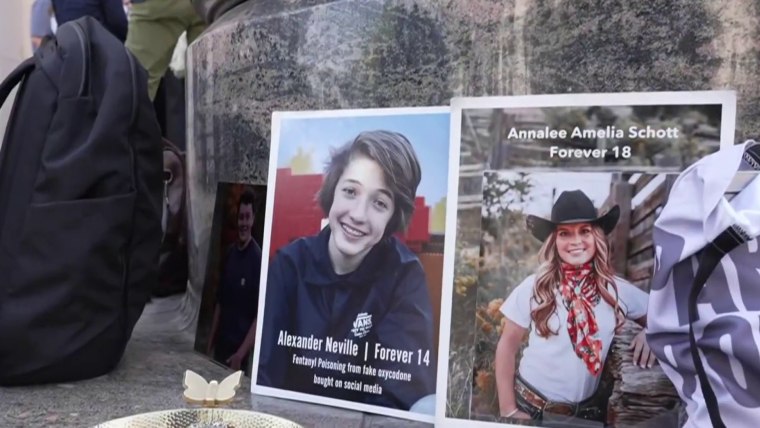
Outside the courtroom, families who say their children were harmed by social media embraced as they celebrated the verdict, telling reporters they feel “vindicated.”

Spokespeople for Meta and Google said the companies disagree with the verdict and plan to appeal.

“Teen mental health is profoundly complex and cannot be linked to a single app,” a Meta spokesperson said. “We will continue to defend ourselves vigorously as every case is different, and we remain confident in our record of protecting teens online.”

José Castañeda, a spokesperson for Google, also said the case “misunderstands YouTube, which is a responsibly built streaming platform, not a social media site.”

In a joint statement, co-lead counsel for K.G.M. said the verdict is “a historic moment” for thousands of children and their families.

“But this verdict is bigger than one case,” the lawyers said. “For years, social media companies have profited from targeting children while concealing their addictive and dangerous design features. Today’s verdict is a referendum — from a jury, to an entire industry — that accountability has arrived.”

The jury decided on $2.1 million in punitive damages for Meta and $900,000 for YouTube, totaling $3 million. It’s a small fraction of the $1 billion in punitive damages the plaintiff’s counsel sought.

Plaintiff K.G.M., center, arrives at Los Angeles County Superior Court on Feb. 26.Mario Tama / Getty Images file

K.G.M.’s lead attorney, Mark Lanier, has said he hopes the proceedings produce transparency and accountability “so that the public can see that these companies have been orchestrating an addiction crisis in our country and, actually, the world.”

The plaintiff was a minor at the time of the incidents outlined in her lawsuit. K.G.M. testified in court that her nearly nonstop use of social media caused or contributed to depression, anxiety and body dysmorphia. It “really affected my self-worth,” she said last month.

Speaking about her social media use, K.G.M. testified that she felt she wanted to constantly be on the platforms and feared missing out if she wasn’t.

Attorneys for Meta and YouTube have disputed claims brought by the plaintiff, arguing their platforms aren’t purposefully harmful and addictive.

A spokesperson for Meta said K.G.M.’s “profound challenges” weren’t caused by social media and pointed to “significant emotional and physical abuse” that she experienced when she was younger.

In his closing argument, an attorney for YouTube said there wasn’t a single mention of addiction to that platform in K.G.M.’s medical records.

The verdict comes after jurors in a separate trial in New Mexico held Meta liable for failing to protect children from online predators and sexual exploitation on Facebook and Instagram.

The New Mexico jury found Tuesday that Meta violated the state’s consumer protection laws and ordered it to pay $375 million in civil penalties. Meta has said it disagrees with the verdict and plans to appeal.

In Los Angeles, deliberations took longer, wrapping up after nearly 44 hours over nine days. The jurors had told Judge Carolyn B. Kuhl that they were having trouble coming to a consensus on one defendant.

Social media companies have historically been shielded by Section 230, a provision added to the Communications Act of 1934 that says internet companies aren’t liable for the content users post.

Meta CEO Mark Zuckerberg leaves Los Angeles County Superior Court on Feb. 18. Kyle Grillot / Bloomberg via Getty Images file

K.G.M.’s lawsuit was the first civil action seeking to hold the platforms accountable for allegedly causing addiction and mental health problems.

TikTok and Snap, who were also named as defendants in K.G.M.’s lawsuit, reached settlements before the trial. They remain defendants in a series of similar lawsuits expected to go to trial this year.

Matt Bergman, founding attorney of the Social Media Victims Law Center — which is representing hundreds of plaintiffs in state and federal proceedings — said the jury’s decision Wednesday “establishes a framework for how similar cases across the country will be evaluated and demonstrates that juries are willing to hold technology companies accountable when the evidence shows foreseeable harm.”

“Families pursuing justice in other jurisdictions can now point to this outcome as proof that these claims deserve to be heard and taken seriously,” Bergman said in a statement.

Lanier told NBC News in an interview that this was the most difficult case he’s tried in his 42 years as a lawyer.

“I think the jury understood that they were the very first case in the history of our country to look at social media addiction, and they wanted to leave no question, but that they seriously considered the evidence,” Lanier said. “So they took forever, then they looked carefully at each of the questions and answered everyone was, yes, guilty.”

California Attorney General Rob Bonta also weighed in on the Los Angeles and New Mexico verdicts, writing in an X statement that California “looks forward to holding Meta accountable in our own upcoming August trial in the Bay Area.”

“TODAY” co-anchor Savannah Guthrie will return to the NBC morning show on April 6, as investigators continue to search for her 84-year-old mother in Arizona.

In her first interview since Nancy Guthrie went missing in February, Savannah Guthrie told Hoda Kotb she believes returning to “TODAY” is “part of my purpose right now” — even if it’s hard to imagine coming back to a workplace “of joy and lightness.”

“I can’t come back and try to be something that I’m not. But I can’t not come back because it’s my family,” Guthrie said in the interview about returning to work. “I don’t know if I can do it. I don’t know if I’ll belong anymore, but I would like to try. I would like to try.”

“I’m not gonna be the same. But maybe it’s like that old poem, ‘More beautiful in the broken places,’” she added.

Tune into “Savannah Speaks: A Dateline Special” at 9 p.m. EST on NBC.

Kotb revealed Guthrie’s return Friday on “TODAY.” Her co-host, Craig Melvin, added that the team “can’t wait to welcome her back with open arms.”

“It’s where she belongs. It’s where we all want her to be,” Melvin said.

A spokesperson for “TODAY” did not have additional comment.

Nancy Guthrie was reported missing Feb. 1 after she did not show up at a friend’s house for virtual church services, authorities said. She was last seen the previous night around 9:45 p.m. after having dinner at her daughter Annie Guthrie’s home.

Authorities have described the case as a possible kidnapping or abduction, but clues have been scarce. The Pima County Sheriff’s Office has not publicly specified a motive.

Guthrie told Kotb that her religious faith is “how I will stay connected to my mom.” She alluded to her mother’s experience with loss after her husband, Charles Guthrie, died at the age of 49 in 1988.

“I saw her belief. I saw her faith. She taught me, she taught all of us,” said Guthrie, who was 16 at the time of her father’s death. “I may not do it as well as her, but I will do it. I will do it for my kids. I will. I will not fall apart. I will not let whoever did this take my children’s mother from them.”

Guthrie repeated her pleas for information about her mother’s possible abduction, saying in part: “We need someone to tell the truth. I have no anger in my heart. I have hope in my heart. I have love. But this family needs peace.”

“We need an answer, and someone has it in their power to help,” she added.

Guthrie also opened up about her visit earlier this month to the New York City set of the “TODAY” show, describing her NBC colleagues as her “greater family.”

“I really wanted to come and see everybody. I just love this beautiful place that we call home, where we get to come and be every day,” she said, adding, “When times are hard, you want to be with your family.”

U.S. stocks rose Wednesday and global oil prices fell in yet another volatile trading session as traders and investors were buffeted by constant headlines about the war in Iran.

News of a 15-point U.S. peace plan proposal sparked hopes early in the day that the Trump administration was moving to end its monthlong war against Iran. Initially, the S&P 500 and the Nasdaq 100 futures rose more than 1%.

But reports that Iran had responded negatively to the proposal briefly knocked index futures off their pre-market highs and lifted oil prices off their morning lows.

Despite the early setback, stocks closed the trading day higher. At 4 p.m. ET, the S&P 500 index was up about 0.4%, the Nasdaq Composite closed 0.7% higher, and the Dow jumped 305 points. The Russell 2000 index of smaller companies rose 1.1%.

The price of U.S. crude oil also traded off its lowest levels of the day and was down only 1.4% to about $90 per barrel by late afternoon. West Texas Intermediate crude oil has soared more than 30% since the start of the war on Feb. 28. The cost per barrel is up 50% since the beginning of the year.

International Brent crude prices traded near breakeven, at around $102 per barrel. The price of heating oil, a proxy for jet fuel, dropped 6%.

The global price of oil directly affects what Americans pay at the gas pump and what it costs them to heat and cool their homes. The average nationwide price of unleaded gas Wednesday was $3.98 per gallon, according to AAA data.

“Markets desperately want to believe in the positive,” UBS Global Wealth Management chief economist Paul Donovan wrote. “Focus on the apparent 15-point US plan to end the war has received more attention than Iranian dismissals of this, or the fact that passage through the Strait of Hormuz is minimal.”

Iran’s response to the U.S. proposal included a list of five conditions for ending the war, according to Iranian state TV, which cited a senior political-security official with knowledge of the details of the proposal.

Pakistan has also offered to mediate talks to end the hostilities, four sources told NBC News. A Persian Gulf official said Pakistan had been passing messages between the two countries for the past two days.

An in-person meeting between the U.S. and Iran could be held in the coming days, two sources added.

But President Donald Trump has continued to give conflicting signals.

On March 16, Trump said he was delaying his scheduled visit to China “by a month or so” to monitor the war. On Monday, he said the Strait of Hormuz would be “open very soon.”

And on Tuesday, Trump told reporters in the Oval Office, “This war has been won.” At the same time, the U.S. is sending more than 1,000 additional troops to the Middle East, sources said.

A motorist drives past a sign displaying prices at a gas station in Oakland, Calif., on Tuesday.Godofredo A. Vásquez / AP

Since the war started, the market has experienced several days like this, when markets are whipsawed by constant back-and-forth comments.

“There’s really no way to know at this point what the facts are regarding the state of negotiations, as neither side has any real incentive to conduct talks via the press, so expect more whipsaw action as things continue to progress,” analysts at Bespoke Investment Group wrote in a client note.

They added that the “ongoing tensions continue to support higher prices [and] stoke inflation concerns” and are likely to cause central banks to remain on hold, rather than cut rates.

On the contrary, traders believe the European Central Bank and the Bank of England will both raise interest rates.

“Uncertainty remains high,” analysts at ING wrote in a note Wednesday morning. “Overall, volatility remains elevated and a geopolitical risk premium persists.”

In the 18 trading sessions since the war began, U.S. oil prices have closed down only five times. Likewise, over the same period, the S&P 500 has closed higher only seven times. Three of those higher closes were only fractional.

After Wednesday’s close, the Nasdaq was down nearly 6% for the year, while the S&P 500 was on track for a 3.5% loss so far. The majority of those losses were concentrated in the weeks since the war began.

Meanwhile, the Strait of Hormuz, through which 20% of the world’s oil supply typically passes, has remained at a near standstill since the war began.

On Monday, just five ships passed through the strait, according to data compiled by S&P Global Market Intelligence. On Tuesday, the total was six. On many days since the war started, not a single ship has passed through.

However, some of the ships passing through the strait have taken an unusual course that put them close to the Iranian coastline, potentially signaling that Tehran was keeping a tight grip on traffic flows. Two Indian ships were granted passage Tuesday after a deal with Iran, Bloomberg News reported. The Iranian navy also guided the ships.

Otherwise, hundreds of other ships loaded up with cargo, oil and liquefied natural gas remain stuck.

At least 40% of Russia‘s oil export capacity is at a halt following Ukrainian drone attacks, a disputed attack on a major pipeline and the seizure of tankers, according to Reuters calculations based on market data.

The shutdown is the most severe oil supply disruption in the modern history of Russia, the world’s second largest oil exporter, and has hit Moscow just as oil prices exceeded $100 a barrel due to the Iran war.

Russia’s oil output is one of the main sources of revenue for the national budget and is central to the $2.6 trillion economy.

An oil tanker moored in Novorossiysk, Russia, in 2022.AP

Ukraine intensified drone attacks on Russia‘s oil and fuel export infrastructure this month, hitting all three of Russia‘s major western oil export ports, including Novorossiysk on the Black Sea and Primorsk and Ust-Luga on the Baltic Sea.

According to Reuters calculations, about 40% of Russia‘s crude oil export capabilities — or around 2 million barrels per day, were shut as of Wednesday after the most recent attack.

That includes Primorsk and Ust-Luga as well as the Druzhba pipeline, which runs through Ukraine to Hungary and Slovakia.

Kyiv has also targeted pipeline oil pumping stations and refineries. Kyiv says it aims to diminish Moscow’s oil and gas revenue, which accounts for around a quarter of Russia‘s state budget proceeds, and weaken its military might.

Russia says the Ukrainian strikes are terrorist attacks and has tightened security across its 11 time zones.

Firefighters extinguish a blaze at a chemical transport terminal at Russia’s Ust-Luga port on Jan. 21, 2024. Local media reported that Ukrainian drones attacked the port.Telegram Channel of head of the Kingisepp district via AP

Ukraine said that part of the Druzhba pipeline was damaged by Russian strikes at the end of January, while both Slovakia and Hungary demanded Kyiv restart the supplies immediately.

The Novorossiysk oil terminal, which can handle up to 700,000 bpd, has been loading oil below plan since damage from a heavy Ukrainian drone attack early this month.

In addition, frequent seizures of Russia-related tankers in Europe have disrupted 300,000 bpd of Arctic oil exports flowing from the port of Murmansk, traders said.

With its westward export routes under fire, Moscow must rely on oil exports to Asian markets, but those routes are limited due to capacity, traders said.

Russia continues uninterrupted supplies via pipelines to China, including the Skovorodino-Mohe and Atasu-Alashankou routes, as well as ESPO Blend exports by sea via the port of Kozmino.

Together, the three routes account for some 1.9 million bpd of oil.

Russia also continues to load oil from its two far eastern Sakhalin projects, shipping about 250,000 bpd from the island.

Traders also say that Russia is supplying the refineries in neighboring Belarus with around 300,000 bpd of oil.

The two pilots killed in the collision between a passenger jet and a Port Authority fire truck at New York’s LaGuardia Airport late Sunday have been identified as Antoine Forest and Mackenzie Gunther.

The pair have yet to be officially named by authorities, who have said only that both pilots of the Canada Air Express plane died and that they were based in Canada. Their identities were confirmed by Canadian news reports and by a college that one pilot attended.

Antoine Forest, one of the pilots who reportedly died in the LaGuardia plane collision.via Facebook

The Federal Aviation Administration, the National Transportation Safety Board and other agencies are investigating the crash. They will seek to determine how the truck was able to cut across the jet’s path moments after it touched down on the runway.

Here’s what we know about the fatal crash.

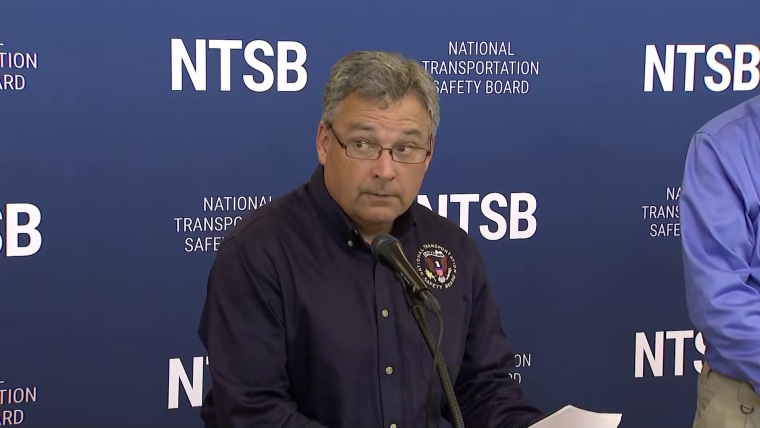
At a news conference Tuesday afternoon, NTSB officials released preliminary information gleaned from the final three minutes of the plane’s cockpit voice recorder that showed that the fire truck was cleared to cross the runway 20 seconds before the crash.

At 2 minutes and 22 seconds, the flight crew checked in with the tower at LaGuardia, said Doug Brazy, NTSB’s senior aviation investigator.

At 2 minutes and 17 seconds, the tower cleared the airplane to land on Runway 4.

Brazy said that at 1 minute and 3 seconds, an airport vehicle made a radio transmission to the tower but that the transmission was “stepped on” by another radio transmission. NTSB Chairwoman Jennifer Homendy said that means there was some sort of interference with the transmission.

At 54 seconds, the tower advised the flight crew that the plane was at a stable approach, Brazy said.

At 40 seconds, the LaGuardia tower asked which vehicle needed to cross a runway. Brazy said the fire truck made a transmission to the tower, which the tower acknowledged. At 25 seconds, the truck requested permission to cross Runway 4. Brazy said that at 20 seconds, the tower cleared the truck to cross.

At 17 seconds, the fire truck read back the runway crossing clearance, he said. According to Brazy, the tower instructed a Frontier Airlines flight to hold position, and at 9 seconds, the tower told the fire truck to stop.

At 8 seconds, there was a sound consistent with the airplane’s landing gear touching down on the runway, he said. At 6 seconds, there was a pilot transfer of controls. Homendy told reporters that the first officer was flying the plane and transferred control to the captain.

At 4 seconds, the tower again instructed the fire truck to stop, Brazy said.

WASHINGTON — On Sunday, Senate Majority Leader John Thune, R-S.D., discussed an off-ramp with President Donald Trump to reopen TSA and end the long lines and delays at airports.

It would fund all of the Department of Homeland Security except for ICE, which Democrats have refused to support without new limitations on immigration enforcement operations, two sources with knowledge of the conversation told NBC News.

White House aides initially conveyed the idea to Trump and, after that briefing, Thune spoke with the president, the two sources said. Thune discussed the idea with Republicans on Capitol Hill, one of the sources said. The second source said it’s seen by numerous Republicans as a viable path to break the logjam.

ICE would be funded separately by Republicans in a party-line “reconciliation” bill that can pass without the need for any Democratic support later in the year.

The Department of Homeland Security has been shut down for more than a month, and while key operations, such as TSA and the Federal Emergency Management Agency, are still operating, many of those employees are working without pay. As NBC News reported this weekend, more than 400 TSA officers have quit since the shutdown began. Immigration and Customs Enforcement is also shut down, but its employees are being paid through Trump’s big beautiful bill passed last year.

Republicans believe that the off-ramp Trump and Thune discussed would win support from Democrats, who have offered to fund noncontroversial parts of the Department of Homeland Security on the Senate floor while the two parties continue to negotiate on immigration.

But Trump rejected it — as he made clear in a Truth Social post Sunday night.

“I don’t think we should make any deal with the Crazy, Country Destroying, Radical Left Democrats unless, and until, they Vote with Republicans to pass ‘THE SAVE AMERICA ACT,’” Trump wrote, while instead calling on Republicans to “Kill the Filibuster, and stay in D.C. for Easter, if necessary.”

Trump’s first two ideas aren’t viable. Democrats are determined to sink the SAVE America Act, which doesn’t have enough support to pass. And Republicans have made clear they lack the votes to nuke the filibuster. They may, however, cancel recess if there’s still no deal by the end of this week.

The conversation with Thune and Trump was first reported by Punchbowl News.

Speaking Monday in Memphis, Tennessee, the president doubled down on his demands to pair Homeland Security funding with the voting bill.

“You don’t have to take a fast vote. Don’t worry about Easter, going home. In fact, make this one for Jesus. OK, make this one for Jesus,” Trump said, adding: “The most important part of homeland security is voter ID and proof of citizenship. Nobody can vote on Homeland Security without voter ID or proof of citizenship.”

Senate Minority Leader Chuck Schumer’s office said that Democrats will again seek unanimous consent to fund just the TSA on the Senate floor Monday, for the eighth time.

Republicans have so far rejected those stand-alone bills.

If Trump were to change his mind and accept the Thune-GOP idea, it carries benefits for both parties. For Republicans, they could avoid giving into Democratic demands, such as requiring immigration enforcement officers to remove their masks and requiring judicial warrants to conduct raids. For Democrats, they could keep their fingerprints off ICE funding, which has become toxic with their base since Homeland Security agents killed protesters Alex Pretti and Renee Good in Minneapolis.

“We can be out of this shutdown by the end of the week,” Sen. John Kennedy, R-La., said Sunday. “Here’s what we do. The Democrats are amenable to opening up everything at DHS but ICE. We should accept that. The very next day, we should file a budget resolution through reconciliation that funds ICE as we deem appropriate. We don’t need Democratic votes to do that.”

Democrats are also planning to seize on the Trump social media post to argue that he owns the shutdown and travel chaos.

Reconciliation bills are arduous, requiring near-unanimous support among Republicans, especially given the tiny House majority. There has been deep skepticism that the party could pull it off, even if it tried. But needing to fund an agency like ICE would raise the impetus to use that path.

Under the “big, beautiful bill” passed by Republicans last year, ICE received a cash infusion of about $75 billion for the next four years to help carry out Trump’s mass deportation program.

The path comes with another possible upside for the White House: Some Trump allies have proposed reconciliation to approve supplemental funding for Trump’s war in Iran. It’s not clear that could win enough Democratic support.

U.S. stocks surged Monday, after President Donald Trump announced that he was postponing all military strikes on Iranian power plants for a five-day period.

Trump said the U.S. and Iran had engaged in what he called “very good and productive conversations regarding a complete and total resolution of our hostilities in the Middle East.”

Reporting about the nature and timing of these “conversations” evolved over the course of the day, and included conflicting accounts from various stakeholders.

But for markets, the talks offered a glimmer of hope that a path toward the de-escalation of the conflict — and the oil crisis it created — were within reach.

Iranian state media responded to Trump’s post by saying the U.S. president has “backed down” after Iran’s firm response.

Trump, however, said that Iran had “called” to discuss trying to resolve the war diplomatically.

“They want to make a deal, and we are very willing to make it,” Trump told reporters before boarding Air Force One in Florida.

The Strait of Hormuz, a crucial transit point for global oil supplies, could be “open very soon,” Trump added, but he provided few details.

Experts and analysts quickly pointed out that even if the fighting were to end this week, it would still take months for the strait to reopen.

The S&P 500 and Nasdaq 100 futures initially soared about 3% on Trump’s post shortly after 7 a.m. ET. By the time the closing bell rang, both indexes still recorded significant gains, but less than futures had indicated early in the morning. The S&P 500 closed up 1.1% and the Nasdaq Composite ended the day higher by 1.4%.

The gains were also broad based, with every S&P sector ending the day higher.

The Dow Jones Industrial Average also shot higher immediately after Trump’s statement. By the end of the trading session, the Dow was higher by 631 points, and the Russell 2000 index closed up 2.7%.

It was the best day for the S&P, Nasdaq and Dow since Feb. 6.

Oil prices plunged around 11% and U.S. crude oil settled for the day at $88.13 per barrel. International Brent crude oil fell to $99.94 per barrel, settling under $100 per barrel for the first time since March 11.

Still, crude oil prices have risen more than 30% since the war began on Feb. 28, and more than 50% since the start of the year.

Trump’s Monday announcement on social media came after the president on Saturday said that he had given the Iranian regime 48 hours to “fully open, without threat, the Strait of Hormuz.” That ultimatum was set to expire Monday night.

U.S. natural gas prices dropped 6% Monday, European natural gas futures slid 9% and heating oil prices dropped 12%. Heating oil futures can also be a proxy for the price of jet fuel.

U.S. Treasury bonds also rose in the minutes after Trump’s comments, and the yields which guide borrowing rates for consumers dropped after posting big moves higher on Thursday and Friday on rising inflation fears stemming from soaring energy prices. Yields were down only slightly in mid-morning trading after the statements from Iranian media and Trump.

Investors were already grappling with how to trade headlines about the war before Monday’s volatility.

“Investors have two related problems in pricing risks around the Gulf war,” UBS economist Paul Donovan said in a note on Monday before Trump’s post. “Statements from top U.S. administration officials give different and at times contradictory assessments of the war; in the absence of measurable objectives, this is all markets have to respond to. The result is volatility.”

(TheNewswire)

Brossard, Quebec TheNewswire – le 12 mars 2026 CORPORATION Charbone (TSXV: CH,OTC:CHHYF; OTCQB: CHHYF; FSE: K47) (« Charbone » ou la « Société »), un producteur et distributeur nord-américain spécialisé dans l’hydrogène propre Ultra Haute Pureté (« UHP ») et les gaz industriels stratégiques, est heureuse d’annoncer sa participation à la conférence Hydrogen East du 13 avril 2026, ainsi que le développement d’un hub d’approvisionnement dédié à l’hydrogène UHP et aux gaz de spécialité stratégiques dans le marché du Canada Atlantique (« Hub Atlantique »).

Cette initiative marque une nouvelle étape dans la stratégie de déploiement de Charbone visant à établir un réseau intégré de hubs de production, stockage et distribution d’hydrogène et de gaz industriels stratégiques en Amérique du Nord.

Le futur Hub Atlantique qui sera géré par sa filiale Charbone Nouvelle-Écosse Inc. et opérationnel d’ici juin 2026, servira d’installation physique dédiée au stockage local et à la distribution régionale, permettant d’assurer un approvisionnement fiable et flexible en hydrogène pour une variété d’utilisateurs industriels exigeants, incluant les secteurs de la défense, de la fabrication avancée, de la mobilité et des infrastructures énergétiques.

Charbone est active dans la région de l’Atlantique depuis plus de trois (3) années et a développé une connaissance approfondie des marchés de la Nouvelle-Écosse, du Nouveau-Brunswick et de l’Île-du-Prince-Édouard, tout en travaillant sur différentes initiatives avec des clients et partenaires potentiels d’envergure, notamment dans les domaines suivants :

  • infrastructures portuaires 

  • chantiers navals et installations de la Marine canadienne 

  • chaîne d’approvisionnement de composantes automobiles 

  • entreprises de services publics et énergétiques 

  • entreprises de recherche et développement 

  • solutions de transport avancées à éro émission 

Ce modèle « hub-and-spoke » constitue un pilier de la stratégie de Charbone visant à déployer progressivement un réseau évolutif de hubs d’approvisionnement en hydrogène et en gaz industriels stratégiques à travers le Canada et les États-Unis, permettant de soutenir les marchés régionaux grâce à des capacités locales de stockage, de logistique et de distribution.

« La région du Canada Atlantique représente un marché stratégique pour Charbone, notamment en raison de la présence d’infrastructures de grandes qualités, d’utilisateurs industriels d’envergures et d’initiatives de transition énergétique, » a déclaré Dave B. Gagnon, PDG de Charbone. La Société prévoit que ce hub jouera un rôle structurant dans le développement de sa future plateforme logistique nord-américaine de l’hydrogène. »

Pour plus de détails sur la Conférence Hydrogen East, veuillez cliquer sur le lien ci-bas :

À propos de CORPORATION Charbone

Charbone est un développeur et producteur d’hydrogène propre Ultra Haute Pureté (UHP) doté d’une plateforme de distribution de gaz industriels en pleine expansion. Grâce à une approche modulaire, Charbone se concentre sur le développement d’un réseau d’usines de production d’hydrogène propre en Amérique du Nord et sur certains marchés à l’étranger, en commençant par son projet phare de Sorel-Tracy au Québec. Le modèle intégré de l’entreprise réduit les risques, améliore l’évolutivité et permet de diversifier ses sources de revenus grâce à des partenariats dans le domaine de l’hélium et d’autres gaz de spécialités. Charbone s’engage à soutenir la transition mondiale vers une économie bas carbone en fournissant des solutions d’hydrogène propre et de gaz de spécialités accessibles et décentralisées, tout en soutenant les clients industriels mal desservis en gaz et en accélérant la transition vers une énergie propre locale. Charbone est coté sur la bourse de croissance TSX (TSXV: CH,OTC:CHHYF); sur les marchés OTC (OTCQB: CHHYF); et à la Bourse de Francfort (FSE: K47). Pour plus d’informations, veuillez visiter www.charbone.com.

Énoncés prospectifs

Le présent communiqué de presse contient des énoncés qui constituent de « l’information prospective » au sens des lois canadiennes sur les valeurs mobilières (« déclarations prospectives »). Ces déclarations prospectives sont souvent identifiées par des mots tels que « a l’intention », « anticipe », « s’attend à », « croit », « planifie », « probable », ou des mots similaires. Les déclarations prospectives reflètent les attentes, estimations ou projections respectives de la direction de Charbone concernant les résultats ou événements futurs, sur la base des opinions, hypothèses et estimations considérées comme raisonnables par la direction à la date à laquelle les déclarations sont faites. Bien que Charbone estime que les attentes exprimées dans les déclarations prospectives sont raisonnables, les déclarations prospectives comportent des risques et des incertitudes, et il ne faut pas se fier indûment aux déclarations prospectives, car des facteurs inconnus ou imprévisibles pourraient faire en sorte que les résultats réels soient sensiblement différents de ceux exprimés dans les déclarations prospectives. Des risques et des incertitudes liés aux activités de Charbone peuvent avoir une incidence sur les déclarations prospectives. Ces risques, incertitudes et hypothèses comprennent, sans s’y limiter, ceux décrits à la rubrique « Facteurs de risque » dans le rapport de gestion de la Société pour la période terminée le 30 septembre 2025, qui peut être consultée sur SEDAR+ à l’adresse www.sedarplus.ca; ils pourraient faire en sorte que les événements ou les résultats réels diffèrent sensiblement de ceux prévus dans les déclarations prospectives.

Sauf si les lois sur les valeurs mobilières applicables l’exigent, Charbone ne s’engage pas à mettre à jour ni à réviser les déclarations prospectives.

Ni la Bourse de croissance TSX ni son fournisseur de services de réglementation (tel que ce terme est défini dans les politiques de la Bourse de croissance TSX) n’acceptent de responsabilité quant à la pertinence ou à l’exactitude du présent communiqué.


Contact Corporation Charbone

Téléphone: +1 450 678 7171

Courriel: ir@Charbone.com

Benoit Veilleux

Chef de la direction financière et secrétaire corporatif


Copyright (c) 2026 TheNewswire – All rights reserved.

News Provided by TheNewsWire via QuoteMedia

This post appeared first on investingnews.com

Cartier Resources Inc. (″ Cartier ″ or the ″ Company ″) (TSXV: ECR,OTC:ECRFF; FSE: 6CA) is pleased to announce the ninth batch of results from the 100,000-m drilling program (2 drill rigs), for the Portal Sector, specifically from the North Simon Zone (″ NSZ ″) on the 100%-owned Cadillac Project, located in Val-d’Or (Abitibi, Quebec).

Strategic Highlights from Portal Sector

Drill Hole Results (Figures 1 to 4)

  • CA26-314 intersected 7.1 g/t Au over 8.0 m including 38.8 g/t Au over 1.0 m (NS Zone).
  • CA26-325 graded 6.8 g/t Au over 2.2 m (NS Zone).
  • CA26-308 reported 3.3 g/t Au over 4.2 m (5C5 Zone).

Significance for Investors

  • Holes CA26-314 and 325 confirm the newly recognized NSZ high-grade gold zone near surface. The mineralization extends over 200 m in strike length and remains open in all directions, suggesting significant upside exploration potential.
  • Most importantly, NSZ is strategically located just 150 metres east of historical ramp. This logistical advantage should enhance the development flexibility and economics of Cadillac Project.

Next Steps

  • Further expansion drilling is planned to significantly refine the geological model, verify the mineralization continuity and determine the gold enrichment vectors.
  • Additional exploration drilling is required to test several new high-priority regional targets along strike of the Portal Sector and the Cadillac Fault Zone, backed by detailed structural and geological modelling and VRIFY’s artificial intelligence (AI) driven targeting.

These results of Portal Sector are particularly exciting as they confirm the presence of a fourth gold sector with strong exploration potential. Benefiting from the existing road access and historical infrastructure, this new sector has the potential for resource growth while being strategically located with respect to the Main Sector. We believe it could significantly enhance the value of the project and provide additional flexibility as we continue to advance and expand the overall development opportunities.‘ – Ronan Deroff, Vice President Exploration of Cartier.

Table 1: Drill hole best assay results from Portal Sector

Hole Number From (m) To (m) Core Length** (m) Au (g/t) Uncut Vertical Depth (m) Zone
CA26-308 122.8 127.0 4.2 3.3 ≈80 5C5
CA26-314 127.0 135.0 8.0 7.1*

≈110

NS

Including 127.0 128.0 1.0 18.1
Including 134.0 135.0 1.0 38.8*
CA26-325 29.0 31.2 2.2 6.8

≈25

NS

Including 29.0 30.0 1.0 5.8
Including 30.0 31.2 1.2 7.6

* Occurrences of visible gold (VG) have been noted in the drill core at various intervals. ** Based on the observed intercept angles within the drill core, true thicknesses are estimated to represent approximately 50-90% of the reported core length intervals.

Figure 1: Location of the new drill results (regional plan view)

Figure 2: Location of the new drill results (regional longitudinal section)

Figure 3: Plan view, cross and long sections of the Portal Sector

Figure 4: Photos of the drill core from hole CA26-314

Portal Sector

The Portal Sector is a highly prospective area featuring the new North Simon Zone with indicated resources of 9,600 ounces (0.2 million tonnes at 1.9 g/t Au) and inferred resources of 112,600 ounces (1.8 million tonnes at 2.0 g/t Au). The latter is the first ever resource estimate in this sector for which there has been only limited and relatively shallow testing. This sector hosts several newly defined high-priority drill targets.

This sector lies along an east-west trending, strongly sheared corridor (Cadillac Fault Zone) and occurs at the contact between the hanging wall turbiditic sedimentary rocks (wacke-mudrock), locally conglomerates and iron formations of Cadillac Group and the footwall mafic volcanics (basalt) of Piché Group. This lithological unit is a favorable horizon for hydrothermal fluid flow, likely related to synvolcanic gold deposition.

The Portal Sector, defined by at least four parallel gold-rich zones, are typically and primarily associated with a fine-grained and disseminated arsenopyrite-pyrrhotite mineralization, with a pervasive biotite-chlorite-carbonate alteration, all crosscut by late-stage smoky and white quartz vein and veinlet stockworks containing visible gold. Locally, accessory minerals such as pyrite and tourmaline are observed.

Milestones of 2025-2027 Exploration Program

100,000 m Drilling Program (Q3 2025 to Q2 2027)

The ambitious 600-hole drilling program will both expand known gold zones and test new shallow surface high-potential targets. The objective is to unlock the camp-scale, high-grade gold potential along the 15 km Cadillac Fault Zone. It is important to note that Cartier’s recent consolidation of this large land holding offers the unique opportunity in over 90 years for unrestricted exploration.

Environmental Baseline Studies & Economic Evaluation of Chimo mine tailings (Q3 2025 to Q3 2026)

The baseline studies will be divided into two distinct parts which include 1) environmental baseline desktop study and 2) preliminary environmental geochemical characterization. The initial baseline studies will provide a comprehensive understanding of the current environmental conditions and implement operations that minimize environmental impact while optimizing the economic potential of the project. These studies will be supplemented by an initial assessment of the economic potential of the past-producing Chimo mine tailings to determine whether a quantity of gold can be extracted economically.

Metallurgical Sampling and Testwork Program (Q4 2025 to Q1 2026)

The metallurgical testwork program includes defining of expected gold recovery rates and improving historical results from the Chimo deposit, as well as establishing metallurgical recovery data for the first-time for the East Chimo and West Nordeau satellite deposits, where no previous data exists. This comprehensive program will characterize the mineralized material, gold recovery potential and validate optimal grind size defining the most efficient and cost-effective flowsheet. The data generated will directly support optimized project development and have the potential to significantly reduce both capital and operating costs, while also improving the environmental footprint.

Preliminary Economic Assessment (2026)

Internal engineering studies have been initiated to validate a multitude of development scenarios that consider the updated MRE and current market environment. Following the selection of the most optimal scenario, a PEA will be completed which will also build upon the results of the metallurgical testwork program and the environmental baseline studies to unveil the updated development strategy and vision of the project.

Table 2: Drill hole collar coordinates from Portal Sector

Hole Number UTM Easting (m) UTM Northing (m) Elevation (m) Azimuth (°) Dip (°) Hole Length (m)
CA26-308 331360 5320154 340 184 -44 144
CA26-309 331360 5320154 340 191 -70 210
CA26-310 331360 5320154 340 231 -78 261
CA26-311 331278 5320204 338 213 -48 195
CA26-312 331278 5320204 338 210 -74 261
CA26-314 330937 5320470 335 207 -59 171
CA26-315 330937 5320470 335 160 -70 204
CA26-316 330937 5320470 335 184 -80 204
CA26-317 330951 5320425 335 219 -44 120
CA26-318 331011 5320439 335 213 -66 150
CA26-319 331011 5320439 335 207 -81 171
CA26-320 331037 5320425 335 188 -53 117
CA26-323 331010 5320365 335 165 -46 75
CA26-325 330946 5320385 335 204 -77 90

Table 3: Drill hole detailed assay results from Portal Sector

Hole Number From (m) To (m) Core Length* (m) Au (g/t) Uncut Vertical Depth (m) Zone
CA26-308 88.0 89.0 1.0 1.8 ≈60
And 122.8 127.0 4.2 3.3

≈80

5C5

Including 122.8 123.8 1.0 4.6
Including 123.8 124.8 1.0 1.6
Including 124.8 125.8 1.0 2.9
Including 125.8 126.3 0.5 5.3
Including 126.3 127.0 0.7 2.7
CA26-309 164.9 166.0 1.1 1.3 ≈155
And 188.0 189.0 1.0 1.6 ≈175 5C5
CA26-310 242.3 243.0 0.7 4.0* ≈235 5C5
CA26-311 142.0 143.0 1.0 1.8 ≈105
And 166.0 167.0 1.0 3.5

≈125

5C5

And 170.0 171.0 1.0 1.0
And 177.0 178.0 1.0 2.2
And 178.0 179.0 1.0 1.0
CA26-312 219.0 219.5 0.5 1.2 ≈210
And 249.0 250.0 1.0 1.1 ≈235

5C5

And 251.0 252.0 1.0 1.4
And 252.0 253.0 1.0 3.1
CA26-314 33.0 34.0 1.0 1.1 ≈30

And 34.0 35.0 1.0 1.8
And 78.0 79.0 1.0 1.0 ≈70

And 81.3 82.0 0.7 2.3
And 91.5 92.0 0.5 2.1
And 127.0 135.0 8.0 7.1* ≈110

NS

Including 127.0 128.0 1.0 18.1
Including 134.0 135.0 1.0 38.8*
CA26-315 44.5 45.5 1.0 1.2 ≈40
And 80.0 81.2 1.2 3.5 ≈75
CA26-316 194.0 195.0 1.0 1.2 ≈190

NS

And 197.0 198.0 1.0 1.7
CA26-317 70.0 71.0 1.0 1.0 ≈45
And 101.0 102.0 1.0 1.5 ≈65
CA26-318 106.0 107.0 1.0 1.2 ≈95

NS

And 107.0 108.0 1.0 1.5
CA26-319 76.0 77.0 1.0 1.2 ≈75
CA26-320 37.0 38.0 1.0 2.0 ≈25
CA26-323 40.5 41.5 1.0 1.0 ≈30
CA26-325 15.0 16.0 1.0 2.7 ≈15
And 29.0 31.2 2.2 6.8 ≈25

NS

Including 29.0 30.0 1.0 5.8
Including 30.0 31.2 1.2 7.6

* Occurrences of visible gold (VG) have been noted in the drill core at various intervals. ** Based on the observed intercept angles within the drill core, true thicknesses are estimated to represent approximately 50-90% of the reported core length intervals.

Quality Assurance and Quality Control (QA/QC) Program

The drill core from the Cadillac Project is NQ-size and, upon receipt from the drill rig, is described and sampled by Cartier geologists. Core is sawn in half, with one half labelled, bagged and submitted for analysis and the other half retained and stored at Cartier’s coreshack facilities located in Val-d’Or, Quebec, for future reference and verification. As part of Quality Assurance and Quality Control (QA/QC) program, Cartier inserts blank samples and certified reference materials (standards) at regular intervals into the sample stream prior to shipment to monitor laboratory performance and analytical accuracy.

Drill core samples are sent to MSALABS’s analytical laboratory located in Val-d’Or, Quebec, for preparation and gold analysis. The entire sample is dried and crushed (70% passing a 2-millimeter sieve). The analysis for gold is performed on an approximately 500 g aliquot using Chrysos Photon Assay technology, which uses high-energy X-ray excitation with gamma detection to quickly and non-destructively measure gold content.

Alternatively, samples are submitted to Activation Laboratories Ltd. (‘Actlabs’), located in either Val-d’Or or Ste-Germaine-Boulé, both in Quebec, for preparation and gold analysis. The entire sample is dried, crushed (90% passing a 2-millimetre sieve) and 250 g is pulverized (90% passing a 0.07-millimetre sieve). The analysis for gold is conducted using a 50 g fire assay fusion with atomic absorption spectroscopy (AAS) finish, with a detection limit up to 10,000 ppb. Samples exceeding this threshold are reanalyzed by fire assay with a gravimetric finish to determine high-grade values accurately.

Both MSALABS and Actlabs are ISO/IEC 17025 accredited for gold assays and implement industry-standard QA/QC protocols. Their internal quality control programs include the use of blanks, duplicates, and certified reference materials at set intervals, with established acceptance criteria to ensure data integrity and analytical precision.

Qualified Person

The scientific and technical content of this press release has been prepared, reviewed and approved by Mr. Ronan Déroff, P.Geo., M.Sc., Vice President Exploration, who is a ″ Qualified Person ″ as defined by National Instrument 43-101 – Standards of Disclosure for Mineral Projects (″ NI 43-101 ″).

About Cadillac Project

The Cadillac Project, covering 14,000 hectares along a 15-kilometre stretch of the Cadillac Fault, is one of the largest consolidated land packages in the Val-d’Or mining camp. Cartier’s flagship asset integrates the historic Chimo Mine and East Cadillac projects, creating a dominant position in a world class gold mining district. With excellent road access, year-round infrastructure and nearby milling capacity, the project is ideally positioned for rapid advancement and value creation.

The Cadillac property contains total gold resource of 767,800 ounces in the measured and indicated category (10.0 Mt at 2.4 g/t Au) and 2,416,900 ounces in the inferred category (35.2 Mt at 2.1 g/t Au) across all the sectors. Please see the ″ NI 43-101 Technical Report and Mineral Resource Estimate on the Cadillac Project, Val-d’Or, Abitibi, Quebec, Canada. Pierre-Luc Richard, P.Geo. of PLR Resources Inc., Stephen Coates, P.Eng. of Evomine Consulting Inc. and Florent Baril, P.Eng. of Bumigeme Inc. ″, effective January 27, 2026.

About Cartier Resources Inc.

Cartier Resources Inc., founded in 2006 and headquartered in Val-d’Or (Quebec) is a gold exploration company focused on building shareholder value through discovery and development in one of Canada’s most prolific mining camps. The Company combines strong technical expertise and a track record of successful exploration to advance its flagship Cadillac Project. Cartier’s strategy is clear: unlock the full potential of one of the largest undeveloped gold landholdings in Quebec.

For further information, contact:

Philippe Cloutier, P. Geo.
President and CEO
Telephone: 819-856-0512
philippe.cloutier@ressourcescartier.com
www.ressourcescartier.com

Neither TSX Venture Exchange nor its Regulation Services Provider (as that term is defined in policies of the TSX Venture Exchange) accepts responsibility for the adequacy or accuracy of this release.

Photos accompanying this announcement are available at:
https://www.globenewswire.com/NewsRoom/AttachmentNg/4a6070a5-433e-49db-b60d-22387d3a3983
https://www.globenewswire.com/NewsRoom/AttachmentNg/ac66c90e-4b27-42fa-ad98-5e596b72c8fe
https://www.globenewswire.com/NewsRoom/AttachmentNg/7db6da4e-0bcb-4ce2-8f3a-c58d2e5cf92c
https://www.globenewswire.com/NewsRoom/AttachmentNg/fa6a3b5f-0360-4d98-becb-946a9f200df1

News Provided by GlobeNewswire via QuoteMedia

This post appeared first on investingnews.com

Nevgold Corp. (‘NevGold’ or the ‘Company’) (TSXV:NAU,OTC:NAUFF) (OTCQX:NAUFF) (Frankfurt:5E50) is pleased to announce that the permits have been received and a drill rig is mobilizing to its Limousine Butte Project (the ‘Project’, ‘Limo Butte’) in Nevada. The drilling will test the historical gold heap leach pads for antimony with the objective of advancing the leach pads to a near-term antimony production scenario. This is one of the only near-term, at-surface antimony production scenarios in the United States with a path to potential antimony metal production by 2027. 

NevGold CEO, Brandon Bonifacio, comments: ‘There are very few opportunities like the near-term antimony production potential from the historical gold leach pads at Limo Butte. There is a clear mandate in the United States to find near-term production from a number of Critical Minerals, and we have one of those opportunities which we are rapidly advancing. We are in an advantageous position as we have oxide antimony at surface amendable to leaching at a brownfield mine site in the State of Nevada, which is one of the top mining jurisdictions globally with a systematic permitting regime and strong community support. Our focus is to drill the leach pads to advance to a Mineral Resource Estimate by the beginning of Q2-2026, which will define the grade and quantities of contained antimony that we have on the pads. Once an MRE is delivered, we will be able to evaluate the various development scenarios to extract the antimony from the leach pads, with the objective of reaching antimony metal production by 2027. We have the opportunity to be one of the near-term solutions to the United States building a fully vertically integrated antimony supply chain

Key Highlights

  • Drilling will advance the leach pads to a Mineral Resource Estimate (‘MRE’) by the beginning of Q2-2026 building on the Phase 1 sampling completed (see News Release from January 6, 2026):
    • The MRE is a key step in defining the quantities of antimony that could be processed in the near-term from the historical gold leach pads
    • Drilling will be completed over the coming weeks
    • Certain areas of the leach pads had Phase I sampling results of 0.74% Sb to 0.81% Sb (See Figure 1)
      • 2025 testwork using acid leaching resulted in antimony recoveries of up to 92%
      • Acid Leaching is being reviewed as the preferred metallurgical process for antimony as there is no reliance on downstream processing at third-party smelters; the acid leaching scenario would produce antimony metal at site through a conventional leaching scenario, which has many similarities to Solvent Extraction-Electrowinning (SX/EW) used for oxide copper in the copper industry
      • Antimony recovery has minimal to no impact on gold recovery; the gold in the historical leach pads could also be recovered in the future after antimony processing is completed
    • Antimony is one of the highest priority Critical Minerals due to its strategic importance and military applications; Limo Butte is a brownfield mine site located in the State of Nevada with near-surface, high-grade antimony mineralization
      • Historical leach pads provide opportunity for near-term antimony production
      • A larger commercial gold-antimony opportunity could be advanced and developed in parallel to the historical leach pad opportunity, including drilling, metallurgical testwork, and the preparation of a Mineral Resource Estimate (‘MRE’) at Resurrection Ridge (including high-grade antimony Bullet Zone discovery made in 2025) and Cadillac Valley
      • A staged project development approach offers various potential development scenarios over the next 12-24 months which may achieve near-term production and cash flow
    • 30 holes completed in the current 2025-2026 drill program with 12 holes pending release 

    Limo Butte Planned 2026 Activities / Status Update
    NevGold will continue its active exploration program at Limo Butte including:

    • Evaluating the historical geological database with focus on gold and antimony (completed);
    • Advancing metallurgical testwork (ongoing);
    • Continuing to drill test gold-antimony targets (5,000 meters (30 drillholes) completed, a further 20,000 meters is planned in 2026 focused on the Bullet Zone and Armory Fault discoveries);
    • Advancing the Crushed and Run of Mine (‘ROM’) leach pads to near-term antimony production (Drilling March-2026, MRE beginning of Q2-2026, ongoing metallurgical testwork);
    • Completing initial gold-antimony Mineral Resource Estimate (MRE) (in progress).

    Figure 1 – Historical gold leach pads and summary of Phase 1 pit sampling antimony results released on January 6, 2026. The results show consistent antimony grade throughout both the Crushed and ROM pads. The historically mined leach pads have material at surface that was previously mined and crushed with strong antimony-gold potential. To view image please click here

    Figure 2 – Historical gold leach pads and summary of Phase 1 pit sampling gold results released on January 6, 2026. The results show consistent gold grade throughout both the Crushed and ROM pads. The historically mined leach pads have material at surface that was previously mined and crushed with strong antimony-gold potential. 
    To view image please click here

    Figure 3 – Resurrection Ridge target area with the historically mined Golden Butte pit gold leach pads. 
    To view image please click here

    US Executive Order – Announced March 20, 2025
    The Company is pleased to report the sweeping Executive Order to strengthen American mineral production and reduce U.S. reliance on foreign nations for its mineral supply. Antimony (Sb) has been identified as an important ‘Critical Mineral’ in the United States essential for national security, clean energy, and technology applications, yet limited domestic mine supply currently exists.

    The Executive Order invokes the use of the Defense Production Act as part of a broad United States (‘US’) Government effort to expand domestic minerals production on national security grounds. As it relates to project permitting, the Order states that it will ‘identify priority projects that can be immediately approved or for which permits can be immediately issued, and take all necessary or appropriate actions…to expedite and issue the relevant permits or approvals.’ Furthermore, the Order includes provisions to accelerate access to private and public capital for domestic projects, including the creation of a ‘dedicated mineral and mineral production fund for domestic investments’ under the Development Finance Corporation (‘DFC’).

    This decisive action by the US Government highlights the urgent need to expand domestic minerals output to support supply chain security in the United States. This important Order will help revitalize domestic mineral production by improving the permitting process and providing financial support to qualifying domestic projects.

    Importance of Antimony
    Antimony is considered a ‘Critical Mineral’ by the United States based on the U.S. Geological Survey’s 2022 list (U.S.G.S. (2022)). ‘Critical Minerals’ are metals and non-metals essential to the economy and national security. Antimony is utilized in all manners of military applications, including the manufacturing of armor piercing bullets, night vision goggles, infrared sensors, precision optics, laser sighting, explosive formulations, hardened lead for bullets and shrapnel, ammunition primers, tracer ammunition, nuclear weapons and production, tritium production, flares, military clothing, and communication equipment. Other uses include technology (semi-conductors, circuit boards, electric switches, fluorescent lighting, high quality clear glass and lithium-ion batteries) and clean-energy storage.

    Globally, approximately 90% of the world’s current antimony supply is produced by China, Russia, and Tajikistan. Beginning on September 15, 2024, China, which is responsible for nearly half of all global mined antimony output and dominates global refinement and processing, announced that it will restrict antimony exports. In December-2024, China explicitly restricted antimony exports to the United States citing its dual military and civilian uses, which further exacerbated global supply chain concerns. (Lv, A. and Munroe, T. (2024)) The U.S. Department of Defense (‘DOD’) has designated antimony as a ‘Critical Mineral’ due to its importance in national security, and governments are now prioritizing domestic production to mitigate supply chain disruptions. Projects exploring antimony sources in North America play a key role in addressing these challenges.

    Perpetua Resources Corp. (‘Perpetua’, NASDAQ:PPTA, TSX:PPTA) has the most advanced domestic gold-antimony project in the United States. Perpetua’s project, known as Stibnite, is located in Idaho approximately 130 km northeast of NevGold’s Nutmeg Mountain and Zeus projects. Positive advancements at Stibnite including technical development and permitting has led to US$75 million in Department of Defense (‘DOD’) awards, over $1.8 billion in indicative financing from the Export Import Bank of the United States (‘US EXIM’) (see Perpetua Resources News Release from April 8, 2024) (Perpetua Resources. (2025)), and recent strategic investments of US$180 million from Agnico-Eagle Mines Limited (‘Agnico’) and US$75 million from JPMorganChase’s $1.5 trillion Security and Resiliency Initiative. (see Perpetua Resources News Release from October 27, 2025)

    Figure 4 – Limousine Butte Land Holdings and District Exploration Activity To view image please click here

    ON BEHALF OF THE BOARD

    ‘Signed’

    Brandon Bonifacio, President & CEO

    For further information, please contact Brandon Bonifacio at bbonifacio@nev-gold.com, call 604-337-4997, or visit our website at www.nev-gold.com.

    Sampling Methodology, Quality Control and Quality Assurance
    NevGold QA/QC protocols are followed on the Project and include insertion of duplicate, blank and standard samples in all drill holes. Drill, surface, and pit samples are sent to ISO 17025 certified American Assay Labs in Reno, Nevada. A 30g gold fire assay and multi-elemental analysis ICP-OES method were completed.

    The pit sampling was conducted by Greg French, CPG, the Company’s Vice President, Exploration, who is NevGold’s Qualified Person (‘QP’) under National Instrument 43-101. Mr. French also and reviewed and approved the technical information contained in this news release

    About the Company
    NevGold is an exploration and development company targeting large-scale mineral systems in the proven districts of Nevada and Idaho. NevGold owns a 100% interest in the Limousine Butte and Cedar Wash gold projects in Nevada, and the Nutmeg Mountain gold project and Zeus copper project in Idaho.

    Neither the TSX Venture Exchange nor its Regulation Services Provider (as that term is defined in the policies of the TSX Venture Exchange) accepts responsibility for the adequacy or accuracy of this release.

    Cautionary Note Regarding Forward Looking Statements

    This news release contains forward-looking statements that are based on the Company’s current expectations and estimates. Forward-looking statements are frequently characterized by words such as ‘plan’, ‘expect’, ‘project’, ‘intend’, ‘believe’, ‘anticipate’, ‘estimate’, ‘suggest’, ‘indicate’ and other similar words or statements that certain events or conditions ‘may’ or ‘will’ occur. Forward-looking statements include, but are not limited to, the proposed work programs at Limousine Butte, the exploration potential at Limousine Butte, and the completion of future potential project milestones such as the potential Mineral Resource Estimate (‘MRE’) and reaching potential antimony production. Such forward-looking statements involve known and unknown risks, uncertainties and other factors that could cause actual events or results to differ materially from estimated or anticipated events or results implied or expressed in such forward-looking statements. Such risks include, but are not limited to, general economic, market and business conditions, and the ability to obtain all necessary regulatory approvals. There is some risk that the forward-looking statements will not prove to be accurate, that the management’s assumptions may not be correct or that actual results may differ materially from such forward-looking statements. Accordingly, readers should not place undue reliance on the forward-looking statements. Any forward-looking statement speaks only as of the date on which it is made and, except as may be required by applicable securities laws, the Company disclaims any intent or obligation to update any forward-looking statement, whether as a result of new information, future events or results or otherwise. Forward-looking statements are not guarantees of future performance and accordingly undue reliance should not be put on such statements due to the inherent uncertainty therein.

    References

    Blackmon, D. (2021) Antimony: The Most Important Mineral You Never Heard Of. Article Prepared by Forbes.

    Kurtenbach, E. (2024) China Bans Exports to US of Gallium, Germanium, Antimony in response to Chip Sanctions. Article Prepared by AP News.

    Lv, A. and Munroe, T. (2024) China Bans Export of Critical Minerals to US as Trade Tensions Escalate.  Article Prepared by Reuters.

    Lv, A. and Jackson, L. (2025) China’s Curbs on Exports of Strategic Minerals. Article Prepared by Reuters.

    Perpetua Resources. (2025) Antimony Summary.  Articles and Videos Prepared by Perpetua Resources.

    Sangine, E. (2022) U.S. Geological Survey, Mineral Commodity Summaries, January 2023. Antimony Summary Report prepared by U.S.G.S

    U.S.G.S. (2022) U.S. Geological Survey Releases 2022 List of Critical Minerals. Reported Prepared by U.S.G.S

    News Provided by GlobeNewswire via QuoteMedia

    This post appeared first on investingnews.com